• Skip to primary navigation
  • Skip to main content
  • Skip to primary sidebar
  • Semester Guide
  • Events
  • News
  • PPL
  • Info for Dropdown Menu
    • Parents & Families
    • Future Students
    • Current Students
    • Faculty & Staff
    • Alumni & Donors
    • Community
    • Business
  • A-Z Index
  • Ocelot Access
Schoolcraft College
  • About
  • Academics
  • Admissions & Aid
  • Life at SC
  • Community
  • Get Started
  • A-Z Index
  • Info for
  • Semester Guide
  • News
  • Events
  • Giving
 
Home / Surgical Technicians are Urgently Needed

Surgical Technicians are Urgently Needed

March 7, 2022 by mlemon

Training leads to careers to work in a surgical unit or behind the scenes

Schoolcraft College is offering two new rigorous, exciting health care programs. If your goal is to become an important member of a surgical team, there are two very different options. The first is to train to become a key behind-the-scenes worker. The second is the opportunity to work directly in the operating room. 

Each program is set up so that students can start in one option and decide to go into the other option. With an aging population leading to an increase in surgeries, each position is in demand and will continue to be in the future.

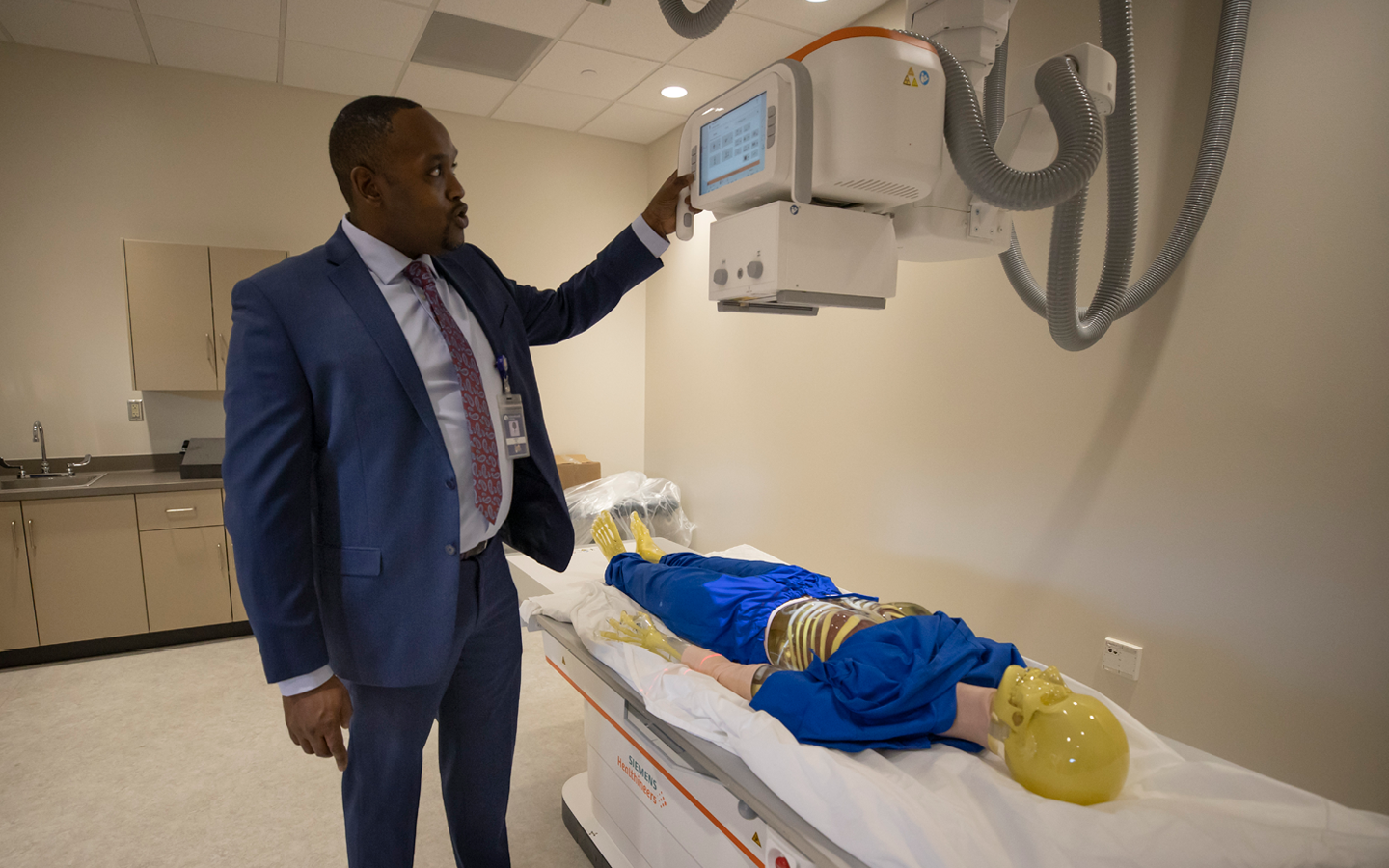
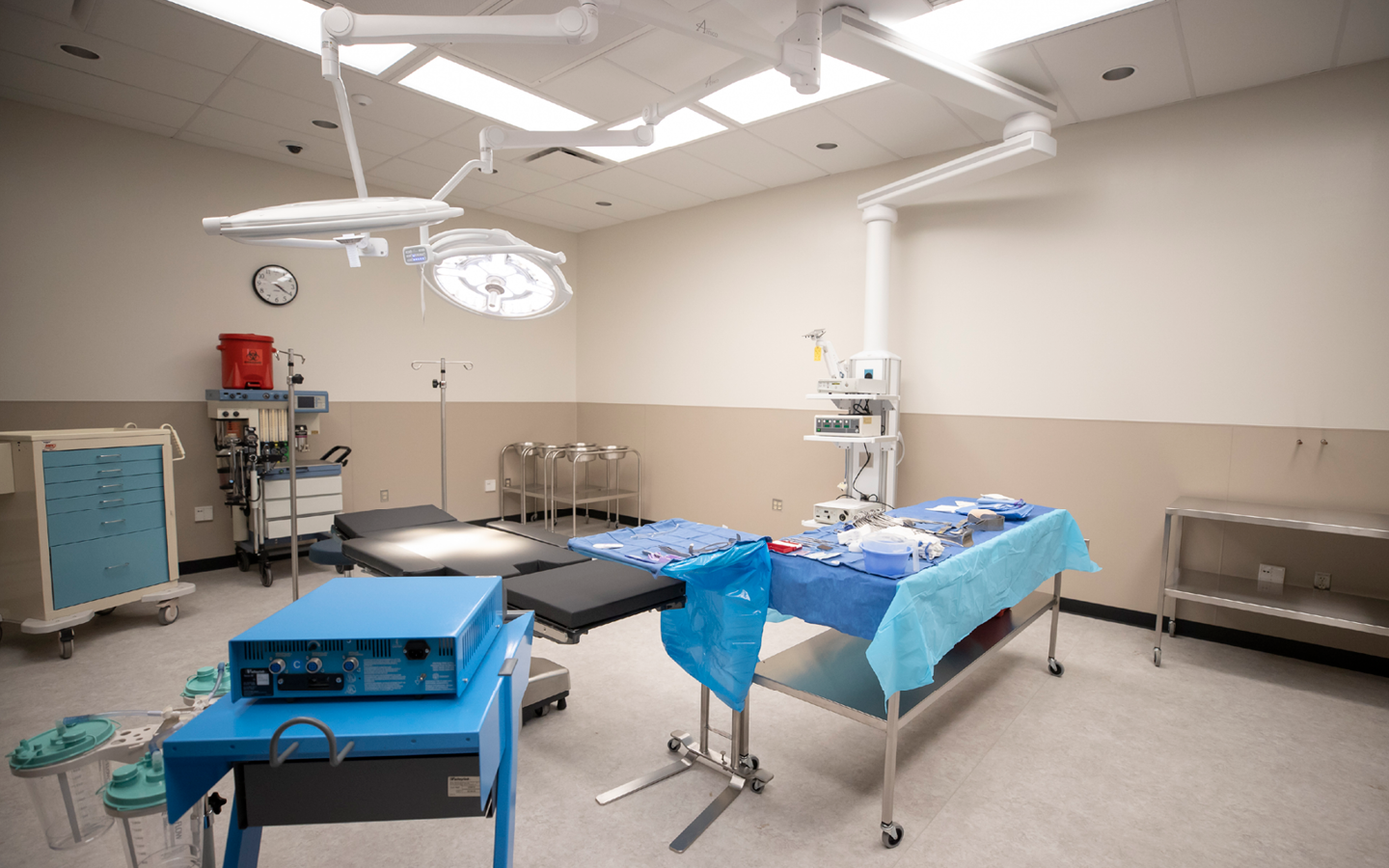
Taught in the brand-new Health Sciences Center, Surgical Services offers the Sterile Processing Skills Certificate and the Surgical Technology Associate in Applied Science (AAS) degree. The new facilities feature the Surgical Services Suite, which is used for training and has all the equipment found in a real-world working environment. 

“There is a huge demand for these jobs. The need for trained surgical support professionals continues to grow,” said Mary Jo Nowicki, BHSA, CST, FAST* and subject matter expert, who helped develop the Surgical Services programs. “These new programs at Schoolcraft College are a great fit for students graduating from high school, other professionals seeking a second career, or anyone looking to enter the medical field.”

Behind the scenes or hands-on?

The Sterile Processing Skills Certificate prepares graduates for a career as a Certified Registered Central Service Technician (CRCST), commonly referred to as a Sterile Processing Technician. In this role, they work with the Surgical Service department to inspect, process and distribute safe instruments and equipment to the surgical unit and the healthcare facility. Central Services is the department responsible for decontamination, disinfection, sterilization, packaging, storage and distribution of medical supplies and equipment.

Preparing for surgery
Certified Surgical Technologists assist with instruments and supplies during surgical procedures.

“The sterile processing technician’s work is one of the most important pieces in preventing infection and there are not enough certified registered central service technicians to fill the open jobs,” Nowicki said. “The CRCST’s work means a much lower post-infection rate with best patient outcomes and is a vital role.”

Successful students are prepared to sit for the national Certified Registered Central Service Technicians (CRCST) exam. The CRCST is an integral part of a multidisciplinary health care environment that works as a division of Surgical Services.

The Surgical Technology AAS degree prepares graduates for a career as a Certified Surgical Technologist (CST), commonly referred to as a Scrub Tech. This person works under the surgeon to establish and maintain a sterile field while assisting with instruments and supplies during each surgical procedure. Surgical Technologists are responsible for preparing the operating room and surgical field as well as making sure all necessary items are available for surgical procedures. During the case, they pass instruments and supplies to the surgeon while working in the sterile role. They are the specialists of sterile technique.

“Becoming a surgical technologist is the fastest entry into operating room patient care. Surgical technologists scrub in, and it is the surgical technologists who are part of the sterile surgical team,” Nowicki said.

Students are prepared to sit for the national Certified Surgical Technologist (CST) exam to earn their credential. Students must demonstrate competency knowledge of perioperative case management prior to entering a clinical internship. 

Surgical tools and equipment
Sterile Processing Technicians inspect, process and distribute safe instruments and equipment to the surgical unit.

The clinical experience offers students hands-on surgical patient care through multiple surgical service specialties. Students will work under the auspice of the surgeon as well as the surgical team to gain the scrub experience required for eligibility to sit for the national Certified Surgical Technologist exam (CST) credentialing exam offered through the National Board of Surgical Technology and Surgical Assisting (NBSTSA).

A closer look at the career outlook and programs

Sterile Processing Skills Certificate

  • Typical employers include hospitals, surgery centers and medical offices. Further education and training can lead to a career as a Surgical Technologist, or work in health care management or materials management.
  • The Sterile Processing Skills Certificate is 19-21 credits. 
    • Full-time students can complete this in two semesters following the curriculum guide. 
    • Not all courses are offered each semester. Students should work with an Academic Advisor to develop a schedule that will work for them.

Surgical Technology AAS degree

  • Typical employers include hospitals, surgery centers and medical offices.
  • Further education and training can lead to careers as a Surgical Assistant, Surgical PA, or work in health care management, materials management and teaching.
  • The Sterile Technology AAS degree is 65.5-70.5 credits.
    • Full-time students can complete in two and a half years (including Spring/Summer terms) following the curriculum guide.
    • The educational and clinical learning experiences requires approximately 40 hours of participation per week in the second year of the program.
    • Not all courses are offered each semester. Students should work with an Academic Advisor to develop a schedule that will work for them
    • Students planning to transfer should check the transfer institution’s requirements/guides or discuss their options with an academic advisor. Number of credits may vary depending on the course selection.

“The new Health Sciences Center is exceptional, and I have never heard of a school supporting the training in Surgical Services as thoroughly as Schoolcraft College,” Nowicki said.

Learn more information on these programs at Schoolcraft College.

*BHSA stands for Bachelor of Health Service Administration. CST stands for Certified Surgical Technologist. FAST stands for Fellow of the Association of Surgical Technology.

Filed Under: News, Program Spotlight Tagged With: Health Sciences Center, Mary Jo Nowicki, Sterile Processing Skills Certificate, surgical technology

March 7, 2022 by mlemon

The free event will be held in a virtual format

After 26 student presentations and over 200 attendees in the past two years, STEAMzSchoolcraft, a student-led conference that bridges the arts, humanities, and sciences, returns for its third year on Friday, March 25. 

This year’s theme is “Transforming Lives Through Storytelling.” Specifically, the theme examines how to transform the world we live in through data-driven storytelling. Students will be encouraged and mentored by Schoolcraft College faculty and staff to explore this idea. The STEAMz presentations focus on ideas, findings, and experiences highlighting academic and professional successes. Presenters address specific values, skills, and experiences needed to set and achieve thoughtful and actionable goals as they transition into university life or the workforce.

Maria Cielo Robles
Cielo Robles, a Schoolcraft Scholars Honors Program alumni and medical student at Michigan State University’s College of Human Medicine, will deliver this year’s keynote presentation.

Cielo Robles, a Schoolcraft Scholars Honors Program alumni and medical student at Michigan State University’s College of Human Medicine, will deliver this year’s keynote presentation. Prior to MSU, she conducted cardiovascular health disparities research at the University of Michigan and pediatric neurosurgery clinical research at Albert Einstein College of Medicine (Bronx, New York). 

Robles has led multiple NIH*-funded substudies, published multiple co-authored papers, including first-author publications, and presented her work at numerous national conferences. She received an Associate of Science degree from Schoolcraft College in 2014. She was the recipient of the Jack Kent Cooke Undergraduate Transfer Scholarship and transferred to Cornell University, graduating with a Bachelor of Science in Human Biology, Health and Society in 2016. 

The event also will feature in-depth and lightning talk presentations facilitated by Schoolcraft College students. Selected students received a scholarship provided by a generous grant through the Schoolcraft College Foundation and will be mentored by faculty and staff to strengthen their presentation, research, and story. To align with this year’s theme, students are encouraged to combine a meaningful story with research findings to drive curiosity and inspiration with their audience. During the event, students will be evaluated and recognized for creatively addressing this year’s theme.

STEAMzSchoolcraft Virtual Summit will take place on Friday, March 25, at 1 p.m. via Blackboard Collaborate. A link to attend can be found on the STEAMz website closer to the conference date. The event is free to attend – registration is not required. 

If you have questions, please contact Sharon Christian, Director of Learning Support Services and STEAMzSchoolcraft Committee Chair, at [email protected]. 

*NIH stands for National Institute of Health.

Filed Under: News, Schoolcraft Spotlight Tagged With: Jack Kent Cooke, Maria Cielito Robles, Sharon Christian, STEAMz

March 7, 2022 by mlemon

Matthew Sweeney earned three credentials, including two Associate Degrees, at Schoolcraft College

Schoolcraft College graduate Matthew Sweeney personifies the need to be flexible, determined and adaptable during challenging times. His path to success has been a bit circuitous to say the least, but now he enjoys a career as working for a company, KCS Advanced Machining Services, that supplies parts to a wide variety of high-tech industries.

Describing Sweeney only as an SC graduate actually does him a disservice – he’s earned three credentials from Schoolcraft College, including two Associate Degrees. The native of Farmington Hills started here in the fall of 2002 after being graduated from Schoolcraft Christian Secondary School.

“I had a great experience at Schoolcraft! It was excellent having so much hands-on training from instructors who are knowledgeable and enthusiastic about their subjects.”

Matthew Sweeney, Schoolcraft College alumni and 5-axis machinist at KCS Advanced Machining Services

“I had considered Engineering, but really wanted to go into the skilled trades,” Sweeney said. “I chose Schoolcraft because it offered a lot of what I was interested in at the time; what interested me especially was the huge investment the school was making into its welding lab. So, I enrolled in the Welding and Fabrication program and graduated soon after with Schoolcraft’s Certificate in Welding & Fabrication.

“I had a great experience at Schoolcraft! It was excellent having so much hands-on training from instructors who are knowledgeable and enthusiastic about their subjects.”

Sweeney put his skills to good use as a fabricator until a slowdown in the automotive industry led to a layoff. As a next step, he considered joining the military before an ad for the Farmington Hills Fire Department caught his eye. So it was back to Schoolcraft College, where he earned his Associate Degree in Firefighting Technology.

Another career reinvention

He enjoyed working as an On-Call Firefighter/EMT for six years, but also wanted a full-time position. Unfortunately, no departments were hiring. “So I want back to Schoolcraft once more to reinvent myself,” as Sweeney put it.

Skilled trades were still appealing, but this time he was intrigued by the Machining Lab run by Gene Keyes. 

“He helped me get into a special Department of Defense Grant class being offered at the time that taught G&M code, the programming language CNC (Computer Numerical Control) machines use,” Sweeney said. “So I took that as I attended my other classes and earned my second Associate Degree from Schoolcraft – an Advanced Manufacturing Technology Degree.”

Sweeney then worked for a few different manufacturing companies making plastic injection molds, gears, components and tooling. He joined KCS Advanced Machining Service in Livonia in 2019 as a 5-axis machinist. (A very basic description of a 5-axis machine is one that can reach five sides of a part and machine features on it in one setup.)

Sweeney describes KCS as a high-mix, low-volume 5-axis machine shop that creates prototype parts for a wide variety of industries, including consumer robotics, aerospace, automotive, marine and firearms.

“We make a range of components for all of them,” Sweeney said. “All of the work here is interesting, generally complex and often requires innovative fixture designs and creative approaches to machine them.”

These high-tech industries need parts created on high-tech machines by skilled professionals.

Matthew Sweeney
Schoolcraft College graduate Matthew Sweeney was featured on the cover of the January 2022 issue of “Modern Machine Shop” magazine.

“We use hyperMILL, which is top-of-the-line CAD/CAM software, to create out G&M code for our 5-axis machines,” Sweeney said. “Our machines are made by HURCO and MATSUURA, cutting-edge multi-axis machining centers. They are fast, powerful, and extremely accurate, capable of mass-production as well as short product runs. 

“It’s great having new, state-of-the-art machines and software to work with — and a lot of times we push the envelope with both. Because of that we frequently find ourselves host to other industry leaders who are interested in what we do and how we do it.”

One particularly interesting project involves NASA.

“Two of our customers are developing NASA’s next-generation flight suits and extra-vehicular spacesuits as part of the Artemis program that’s headed first to the moon, then to Mars,” Sweeney said. “We’re the sub-suppliers making virtually all of the difficult components for the suits.”

Involved throughout the process

Sweeney said a unique aspect of KCS how one person will see a project through completion – being handed a print and a CAD model and taking it all the way to a finished part.

“All of us make programs, set up the machining centers, and then run the job,” he said. “Each of us programs, designs and builds fixtures, sets up machines, runs parts, and inspects them for accuracy. 

“KCS’s owner, Kyle Szczypienski, continually invests in new technology, software and upgrades that constantly add to what we can do. He encourages all of us to continue learning as much as we can and it’s a very stimulating place to work because of it. I’ve been at KCS for three years now and have seen it grow rapidly. We don’t have worn-out machines and we don’t do things one way just because that’s how it’s always been done.”

Sweeney said manufacturing is a dynamic career with many opportunities.

“Automation is becoming more and more common even in small businesses, so learning about that is very important and offers more room for growth,” he said. “The impact of automation is only going to grow and accelerate.

“New manufacturing processes, techniques and increasing capabilities of software are all happening at once and so the overall impact is magnified. Employers are eager for talented and enthusiastic employees. It’s an exciting environment and young machinists are getting into the industry at a great time. Anyone with a strong work ethic, a positive attitude, and a desire to learn and grow can do really well!”

Filed Under: Alumni Spotlight, News Tagged With: Firefighting Technology, Gene Keyes, KCS Advanced Machining Services, Matthew Sweeney, welding

March 3, 2022 by Schoolcraft College

When the horn sounded after the final game of the 2020-21 season, it also ended a difficult, challenging season for the Schoolcraft College women’s basketball team. The Ocelots finished 4-10 overall and just 1-6 in the Michigan Community Colleges Athletic Association (MCCAA).

One year later, the Ocelots are the champions of the Eastern Division of the MCCAA, sport an 18-6 record (13-3 in conference) and will take on Oakland Community College at 7:30 p.m. Friday in the semifinals of the National Junior College Athletic Association (NJCAA) Great Lakes District B tournament. The winner advances to Saturday night’s championship game, with the champion advancing to the NJCAA National Women’s Basketball Tournament in Port Huron, Michigan.

This amazing turnaround has its roots in some familiar, though not always easy, principles that apply as much to the real world as they do to athletics: Hard work, dedication and a willingness to sacrifice for the greater good.

“It’s all due to lots of hard work from our players and staff,” head coach Shay Lewis said. “We took two weeks off last year after our one-win conference season. Since then, we’ve been in the gym.” 

Coach cheering at the team
Head coach Shay Lewis encourages her team during a recent game.

Lewis took over in August of 2019 with a focus on improving the culture, recruiting and resources of the program. This includes adding veteran assistant coaches and other support personnel.

“I wanted our players and recruits to understand what our core values of the program were: Commitment, hard work, accountability, selflessness and team first,” she said. “Things couldn’t change until we started getting players who understood that and bought into it. I believe we have that now. We have a sisterhood that gets it’s bigger than them.”

The improvement was on full display in the season-opening game, a 70-60 win over No. 4 Owens Community College.

“We started five freshmen and got the win at their place,” Lewis said. “We – myself and the coaching staff – knew this could be a special team.”

This season’s success included an eight-game winning streak.

Team cheering each other on
The theme of “Sisterhood” is a key reason why the Schoolcraft College women’s basketball team won the Eastern Division of the Michigan Community College Athletic Association this season.

“We are very young and there has been a big learning curve,” Lewis said. “They had to learn how to work hard for this level, how to play hard and compete every night on this level and they had to learn that it’s bigger than them. It’s about ‘we’ and ‘us,’ not ‘me’ and ‘I.’”

Director of Athletics Cali Crawford, herself a former college basketball player, is pleased to see the program on solid footing again.

“Coach Lewis and her assistant coaches, Megan Murphy and Natalie Nowak, have done an amazing job,” Crawford said. “To go from the bottom of the conference to finishing first in the conference is a major accomplishment and a huge turnaround. I’m grateful for all the hard work our student-athletes, our coaches and our support staff have put in to make this a successful season.”

View the roster.

Filed Under: News, Schoolcraft Spotlight Tagged With: Cali Crawford, Shay Lewis, Women’s basketball

March 1, 2022 by Schoolcraft College

Next event is this Thursday at VisTaTech

The Canton Chamber of Commerce introduces Canton Chamber University, a series of workshops and programs designed to provide personal and professional enrichment opportunities for community members. Schoolcraft College is excited to collaborate and sponsor this endeavor, which aims to connect community leaders with educational opportunities offered by local businesses and institutions.

“The Canton Chamber is pleased to collaborate with its longtime supporter, Schoolcraft College, to present this new educational initiative,” said Thomas Paden, Canton Chamber of Commerce President. “Canton Chamber University comprises a series of professional and personal curriculums benefitting businesses, citizens and students. There are five University categories offered: 1. Business, 2. Finance, 3. Health and Wellness, 4. Talent Acquisition, 5. Student Life Skills.”

  • Nicholas Pomante
    Photo 1
  • JoAnne Stadnicar
    Photo 2
  • Chris Dreis
    Photo 3
Photo 1 – Nicholas Pomante, Wellness Coordinator for Eastern Michigan University’s Office of Wellness & Community Responsibility
Photo 2 – JoAnne Stadnicar, Director of Career Services at Schoolcraft College
Photo 3 – Chris Dreis, owner of Genova’s Pizzeria

Canton Chamber University aims to offer programs every month focusing on the topics in each of the categories. The next program, highlighting health and wellness, examines stress management and avoiding burnout. It will be held from 3:30 to 5:00 p.m. this Thursday, March 3, in Room 205 (Waterman Wing) of the VisTaTech Center on the main campus of Schoolcraft College, 18600 Haggerty Road, Livonia.

Nicholas Pomante, Wellness Coordinator for Eastern Michigan University’s Office of Wellness & Community Responsibility, will be presenting on this important topic. He holds a Master’s Degree in Human Nutrition.

“Through this partnership, Schoolcraft College is excited to empower surrounding communities through educational programs,” said Sharon Christian, Director of Learning Support Services and Canton Chamber Board Member.

Upcoming Canton Chamber University programs are:

  • Cooking Demonstration: Brick Oven Pizza
    • Presented by Chris Dreis, Owner of Genova’s Pizzeria
    • Monday, March 28, 2022, at 12:00 p.m. at Genova’s Pizzeria, 42911 Ford Road, Canton.
  • Resume Essentials
    • Presented by JoAnne Stadnicar, Director of Career Services at Schoolcraft College
    • Wednesday, April 20, 2022, at 3:00 p.m. at VisTaTech Center, Waterman Wing 205

Find the events and register.

Filed Under: News, Schoolcraft Spotlight Tagged With: Canton Chamber of Commerce, Canton Chamber University, Chris Dreis, JoAnne Stadnicar, Nicholas Pomante, Sharon Christian, Thomas Paden

February 28, 2022 by Schoolcraft College

The following is from the biography prepared by the Nobel Foundation on the occasion of Nelson Mandela receiving the Nobel Peace Prize in 1993. A more extensive biography is available on the Nelson Mandela Foundation site. 

Nelson Mandela
Nelson Mandela was awarded the Nobel Peace Prize in 1993. Credit: Nelson Mandela Foundation, Copyright Eric Miller.

Nelson Rolihlahla Mandela was born in Transkei, South Africa, on July 18, 1918. His father was Hendry Mphakanyiswa of the Tembu Tribe. Mandela himself was educated at University College of Fort Hare and the University of Witwatersrand, where he studied law. He joined the African National Congress (ANC) in 1944 and was engaged in resistance against the ruling National Party’s apartheid policies after 1948. He went on trial for treason in 1956-1961 and was acquitted in 1961.

After the banning of the ANC in 1960, Mandela argued for the setting up of a military wing within the ANC. In June 1961, the ANC executive considered his proposal on the use of violent tactics and agreed that those members who wished to involve themselves in Mandela’s campaign would not be stopped from doing so by the ANC. This led to the formation of Umkhonto we Sizwe. Mandela was arrested in 1962 and sentenced to five years’ imprisonment with hard labor. 

  • Nelson Mandela shown with Bishop Desmond Tutu
    Photo 1
  • Nelson Mandela raising his hands
    Photo 2
Photo 1: Nelson Mandela shown with Bishop Desmond Tutu. Credit: Nelson Mandela Foundation, Copyright Louise Gubb.
Photo 2: Nelson Mandela was elected President of the African National Congress. Credit: Nelson Mandela Foundation, Copyright Louise Gubb.

In 1963, when many fellow leaders of the ANC and the Umkhonto we Sizwe were arrested, Mandela was brought to stand trial with them for plotting to overthrow the government by violence. His statement from the dock received considerable international publicity. On June 12, 1964, eight of the accused, including Mandela, were sentenced to life imprisonment. From 1964 to 1982, he was incarcerated at Robben Island Prison, off Cape Town; thereafter, he was at Pollsmoor Prison, nearby on the mainland.

During his years in prison, Mandela’s reputation grew steadily. He was widely accepted as the most significant Black leader in South Africa and became a potent symbol of resistance as the anti-apartheid movement gathered strength. He consistently refused to compromise his political position to obtain his freedom.

Mandela was released on February 11, 1990. After his release, he plunged himself wholeheartedly into his life’s work, striving to attain the goals he and others had set out almost four decades earlier. In 1991, at the first national conference of the ANC held inside South Africa after the organization had been banned in 1960, Mandela was elected President of the ANC while his lifelong friend and colleague, Oliver Tambo, became the organization’s National Chairperson.

Mandela died on December 5, 2013.

See more Black History content at schoolcraft.edu/BHM

Filed Under: Community, News Tagged With: Black History Month

February 28, 2022 by mlemon

Today for our Faculty Spotlight story we’re profiling Carlin Wilson, an adjunct professor in our Movement Science program. A version of this story appeared on BLAC Magazine’s digital site.

Carlin Wilson’s path to Adjunct Professor in the Movement Science program at Schoolcraft College included a few twists and turns. 

“As we know, most college students will change their major at least two times,” Professor Wilson said. “Well, try three for me.”

In Professor Wilson’s case, the more he started to learn about a particular subject, the more he wanted to challenge himself and discover more. A native of Saginaw, Professor Wilson’s interest in the human body first was spurred as he studied Sports Management at Hampton University in Virginia. 

“It was then I started putting more effort into fitness and began to see the positive effects training had on me physically and mentally,” he said. “I also started studying muscle groups and actions, realizing the capabilities of muscle tissues and how the body adapts. 

“That interest led me into pursuing amateur bodybuilding for the next 10 years. The desire to learn how to train and how to diet for my competition then prompted me to major in Physiology (curriculum very similar to that of movement science) and minor in dietetics at Western Michigan University and pursue a degree in Health Sciences.”

Person standing next to a treadmill
Carlin Wilson teaches Fitness Facility Management and Operations in the Movement Science program.

His work at Western Michigan included being the stretch and flexibility coach for football and gymnastics. 

“This experience enhanced my knowledge of muscle actions and injury prevention, which sparked an interest in Physical Therapy,” Professor Wilson said. “While learning rehabilitation practices, I decided I did not want to be limited to restrictions of mainly joint rehabilitation without the training of the muscle tissue. So within my final year I made the switch to Physiology and was able to graduate on time.”

His variety of skills and education made it easy for Professor Wilson to hone his professional career through fitness director positions with a variety of clubs and facilities. At each stop, he focused on helping clients help themselves.

“I would always push my clients to understand the why and how so they could eventually train themselves properly without my assistance,” Professor Wilson said. “Helping people see the body’s ability through the same lenses I do has always been an innate goal of mine.”

This in turn led to a desire to teach at the college level.

“I wanted to be a part of a program that educated and prepared students for real-world experience and/or advanced degrees,” he said. “I was afforded that opportunity at Schoolcraft College, where I serve as an adjunct professor in the Movement Science program teaching Fitness Facility Management and Operations. I also serve as an Advisory Board member for Movement Science Curriculum Development at Schoolcraft College.”

About the Movement Science program

As the name suggests, Movement Science students study how the human body moves as well as how it is affected by disease, age and exercise. 

Schoolcraft College’s program offers a solid foundation for graduate school and/or careers in medicine, pharmacy, public health, fitness training, exercise physiologist, and physical and occupational therapy. The College offers both a one-year certificate (8 courses, 24 credits) and an Associate Degree (18 courses, 60-63 credits).

In addition to teaching theory and practice of human body movement, the curriculum also includes facilities operations, budgeting and entrepreneurship courses, as well hands-on lab testing (metabolic and body composition) on state-of-the-art equipment and work experience. In addition, those pursuing the Associate Degree are eligible to test for fitness certifications with top fitness organizations.

Read more about the Movement Science’s high-tech equipment.

“The two-year Movement Science program includes classes that are not offered at some four-year schools,” Professor Wilson said. “We equip our students with the need to be able to enter the workforce at a high level in a variety of settings and organizations in only two years.”

Learn more about Schoolcraft College’s Movement Science program.

Filed Under: News, Schoolcraft Spotlight Tagged With: Carlin Wilson, Movement Science

February 28, 2022 by mlemon

They can earn certifications to advance their careers

To help better serve students and prepare them for an increasingly competitive job market, Schoolcraft College has comprehensively revamped its Mechatronics program. 

Mechatronics describes the relationship between mechanical machines regulated by electrical control systems. It also encompasses computer engineering, systems engineering and programming.

Students using equipment
The Motor Control workstation teaches electric machines commonly found in industrial, commercial, and residential applications: single-phase AC motors, three-phase AC electric motors, and DC electric motors.

Starting with the Winter 2022 semester, the program will be known as Mechatronics Technology to reflect the increased hands-on classes and alignment with important industry standards. 

“We’ve retooled our new Mechatronics Technology program to better help our students master an array of equipment in a variety of industries,” said Amy Jones, Associate Dean of Occupational Programs, Engineering & Technology. “Also, students will have the opportunity to earn important industry certifications.”

New Robotics course

Leading the new course offerings is ROBAT101, Robot Tool Handling Operations and Programming. It serves as an applied introduction to HandlingTool™ software with an emphasis on safety, setup, recording and troubleshooting. It also includes basic applications of the HandlingTool™ software, including terminology, testing and refining the program. Further, robotic operations and hands-on application are covered to simulate and run robotic programs.

Computer and machinery board
The Programmable Logic Controller (PLC) is a computer that monitors inputs and outputs and makes logic-based decisions for automated processes or machines.

A key benefit in taking this course is that it is aligned to both Smart Automation Certification Alliance (SACA) and FANUC* standards.

“Earning these industry certifications can help students advance in their careers,” Jones said. “Schoolcraft College students can take the exams at no extra charge. Because we are now a SACA-certified location, we also can offer training to industry professionals to earn these certifications.”

What’s taught and where you can apply those skills

Schoolcraft College’s Mechatronics Technology program focuses on the integration of mechanical, electrical (electronics), fluid power (hydraulics or pneumatics) and computer technologies to control machine movements. The students’ studies begin with courses in mechanics, sensors, basic electronics, pneumatics, control logic and robot programming and control.

Machinery equipment
The Mechatronics trainer is a component-based system that prepares learners for mechatronics operation, hands-on PLC programming, and industrial maintenance and problem solving for real-world manufacturing environments.

The program is not directly aimed at specific products. With the multiplicity of equipment presently in use, and the rapid advance and change in technology, the department stresses the development of a broad background that will enable students to find employment and be able to further their skills in a diversified number of industries, including:

  • Aerospace 
  • Energy
  • Equipment manufacturing (including computers) 
  • Plastics

According to federal government data, the average median salary for a person skilled in mechatronics technology is $60,000.

Credentials and degrees

The College offers a Skills Certificate (18 credits), a Certificate (35 credits) and an Associate in Applied Science degree (62-68 credits) in Mechatronics Technology.

Read further information on Schoolcraft College’s Mechatronics Technology program.

*FANUC is a Japanese company with American headquarters in Rochester Hills, Michigan. It is a leading supplier of robots, CNC systems and factory automation.  

Filed Under: News, Program Spotlight Tagged With: Amy Jones, FANUC, Mechatronics Technology, occupational programs, Robot

February 25, 2022 by Schoolcraft College

The Black Panther Party

Black Panther Party founders Huey Newton and Bobby Seale met in 1961 while students at Merritt College in Oakland, California.

They both protested the college’s “Pioneer Day” celebration, which honored the pioneers who came to California in the 1800s, but omitted the role of African Americans in settling the American West. Seale and Newton formed the Negro History Fact Group, which called on the school to offer classes in Black history.

They founded the Black Panthers in the wake of the assassination of Black nationalist Malcolm X and after police in San Francisco shot and killed an unarmed Black teen named Matthew Johnson.

Originally dubbed the Black Panther Party for Self-Defense, the organization was founded in October 1966. The Black Panthers’ early activities primarily involved monitoring police activities in Black communities in Oakland and other cities.

As they instituted a number of social programs and engaged in political activities, their popularity grew. The Black Panthers drew widespread support from urban centers with large minority communities, including Los Angeles, Chicago, New York and Philadelphia. By 1968, the Black Panthers had roughly 2,000 members across the country.

People raising their fists
A photo taken at a Free Huey Newton Rally in 1968 with five of the six women identifiable—Delores Henderson, Joyce Lee, Mary Ann Carlton, Joyce Means and Paula Hill—provides testament to those who actualized the daily operations of the Black Panther Party. NMAAHC, gift of the Pirkle Jones Foundation, ©2011 Pirkle Jones Foundation

Political Activities And Social Programs

Newton and Seale drew on Marxist ideology for the party platform. They outlined the organization’s philosophical views and political objectives in a Ten-Point Program. The Ten-Point Program called for an immediate end to police brutality, employment for African Americans, and land, housing and justice for all.

The Black Panthers were part of the larger Black Power movement, which emphasized Black pride, community control and unification for civil rights.

While the Black Panthers were often portrayed as a gang, their leadership saw the organization as a political party whose goal was getting more African Americans elected to political office. They were unsuccessful on this front. By the early 1970s, FBI counterintelligence efforts, criminal activities and an internal rift between group members weakened the party as a political force.

The Black Panthers did, however, start a number of popular community social programs, including free breakfast programs for school children and free health clinics in 13 African American communities across the United States.

People holding flags
The Panthers said they carried guns as a form of self-defense against police brutality. The Panthers, not the NRA, were forerunners of the open carry gun movement and were fierce defenders of the Second Amendment’s right to bear arms. From CNN.com / ITVS

The FBI And COINTELPRO

The Black Panthers’ socialist message and Black nationalist focus made them the target of a secret FBI counterintelligence program called COINTELPRO.

In 1969, the FBI declared the Black Panthers a communist organization and an enemy of the United States government. The first FBI’s first director, J. Edgar Hoover, in 1968 called the Black Panthers, “One of the greatest threats to the nation’s internal security.”

The FBI worked to weaken the Panthers by exploited existing rivalries between Black nationalist groups. They also worked to undermine and dismantle the Free Breakfast for Children Program and other community social programs instituted by the Black Panthers.

Fred Hampton

Before Breonna Taylor and Amir Locke were the victims of police “No Knock Warrants,” it was Fred Hampton. However, in his case the FBI planned the execution.

Hampton was an honors student from the Chicago suburbs who, as a youth leader with the NAACP, successfully campaigned to have a non-segregated swimming pool built in his hometown. When he joined the Illinois Black Panther Party in 1968, he quickly gained a reputation as a powerful speaker and a coalition builder across racial lines to fight police brutality and address poverty in Chicago’s most neglected neighborhoods. Hampton served as an outstanding leader of five different breakfast programs on the West Side, helped create a free medical center, and initiated a door to door program of health services which test for sickle cell anemia, and encourage blood drives for the Cook County Hospital.

Person talking to media
Fred Hampton. From Brittanica.com

Hampton used his talent as a communicator to create what he termed a “Rainbow Coalition,” an alliance of the Panthers with other groups organized around racial, ethnic, or ideological affiliation. Bringing together groups that otherwise would have had almost no positive contact—including the Puerto Rican Young Lords Association, the Poor White Young Patriots Organization, and the Blackstone Rangers street gang—the Rainbow Coalition provided aid to low-income citizens by combining the member groups’ varied resources. 

Early in the predawn hours of December 4, 1969, a Peoples Gas truck pulled up in front of an apartment occupied by leaders of the Chicago chapter of the Black Panther Party. Fourteen plainclothes Chicago Police officers quietly filed out of the undercover truck, armed with pistols, a shotgun, a machine gun, and a detailed map (provided by the FBI, courtesy of the informant William O’Neal, who positioned himself as Hampton’s security chief). The map clearly identified the bedroom of Fred Hampton, the 21-year-old “chairman” of the Chicago Black Panthers, who was asleep (from being drugged by O’Neal) beside his eight-month-pregnant fiancée. At 4:30 a.m., the police kicked down the front door and started shooting. Ballistics reports later showed that they fired more than 90 times, including machine gun rounds through exterior walls and windows.

When the volley of bullets finally stopped, four of the young Black Panthers inside the apartment lay shot and critically wounded, and two had been killed. The first was Mark Clark, who reached for his own shotgun before taking a bullet through the heart. The second was Fred Hampton, gunned down in his bed. To the FBI, Hampton was another potential “messiah” rising up through the ranks of the Black Panther Party and being groomed for national leadership.

In 1971, a group of antiwar activists broke into an FBI office in the suburbs of Philadelphia looking for evidence that the FBI was spying on leaders of the antiwar movement. What they accidentally uncovered was documented proof of the existence of a secret FBI scheme called COINTELPRO (Counterintelligence Program) with orders to “disrupt, misdirect and otherwise neutralize” Black power movements.

It was under the auspices of COINTELPRO that the FBI spied on and harassed civil rights leaders like Martin Luther King, Jr. and Malcom X. It was all part of Hoover’s efforts to prevent, in his words, the “rise of a messiah that would unify and electrify the militant nationalist movement.”

By the beginning of the 1980s, attacks on the party and internal degradation and divisions caused the party to fall apart. The leadership of the party had been absolutely dismantled, with its rank and file constantly terrorized by the police, killed, imprisoned by false accusations (i.e. Mumia Abu-Jamal, Sundiata Acoli, Mutulu Shakur), or forced to flee the United States (Assata Shakur, and others). Other notable members were Afeni Shakur, mother of Tupac Shakur; Dr. Angela Davis; Kathleen Cleaver; Kwame Toure (Stokely Carmichael); and Elmer “Geronimo Ji Jaga” Pratt. 


Sources: 

  • Black Panthers
  • The 1969 Raid That Killed Black Panther Leader Fred Hampton: Details around the 1969 police shooting of Hampton and other Black Panther members took decades to come to light.

More information:

  • How the Black Panthers’ Breakfast Program Both Inspired and Threatened the Government: The Panthers’ popular breakfast programs put pressure on political leaders to feed children before school.
  • Elmer Pratt: Other California Cases with Mistaken Witness Identifications
  • Huey P. Newton
  • Bobby Seale
  • How the Black Power Movement Influenced the Civil Rights Movement
  • The Rank and File Women of the Black Panther Party and Their Powerful Influence
  • 50 years later, who are the heirs of the Black Panthers?

See more Black History content at schoolcraft.edu/BHM

Filed Under: Community, News Tagged With: Black History Month

February 25, 2022 by Schoolcraft College

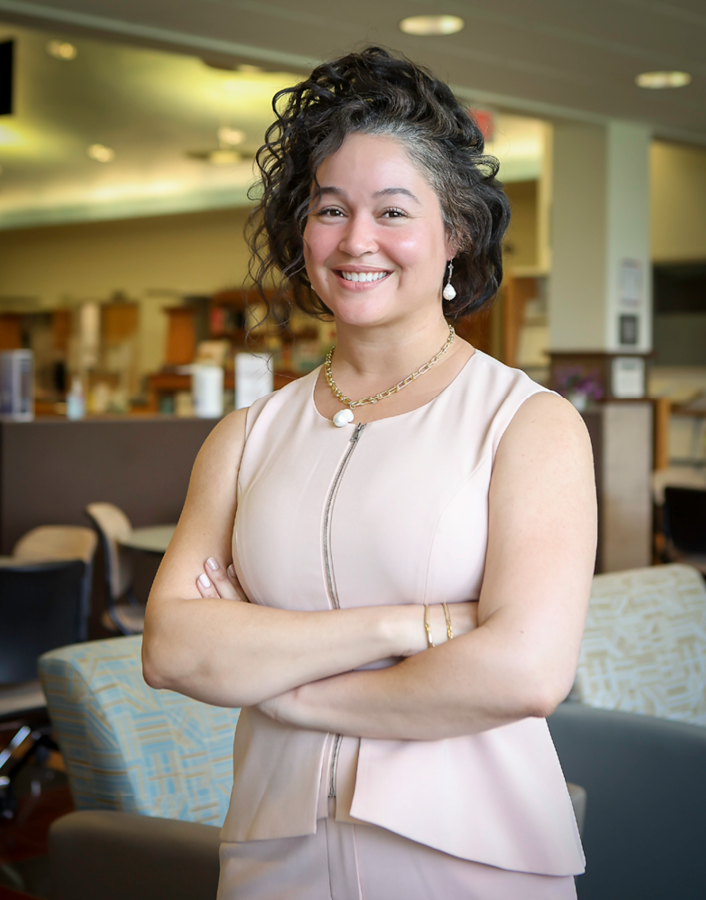
Brynne Barnes, English Professor

Brynne Barnes has taught in the English Department at Schoolcraft College since 2014 and has written two books for younger readers – Books Do Not Have Wings and Colors Of Me – with a third to be published this summer. She holds a Master of Arts in Creative Writing from Eastern Michigan University (summa cum laude).

To help celebrate Black History Month, we’re pleased to share “My Story, My Voice,” a series of essays written by Schoolcraft College students, faculty, staff and alumni. Please go to schoolcraft.edu/BHM to read the complete collection.

Brynne Barnes

By Brynne Barnes, English Professor

As a child, I still remember when I first started learning about slavery. I was appalled to learn that slaves were not allowed to read or write, that many children of African descent, even after slavery ended, had little to no access to elementary education – much less anything beyond that. I had always loved school before, but this sparked something in me. It made me want to read and write as often as I could. I sensed there was something special in those books, something powerful about putting pen to paper – a secret, a magic that any oppressor would want to keep hidden. So I made sure that I knew what it was.

When I became an English Professor, I never dreamt that I would stand and teach in the very classrooms that some of my own grandparents, who grew up in the deep South, were never allowed to attend. I never dreamed that I would be an author, let alone win awards. I never even imagined that the very things my ancestors were denied would not only put food on my table, but free me to touch the lives of so many people. These gifts are not mine, but theirs – the ones they were not allowed to share.

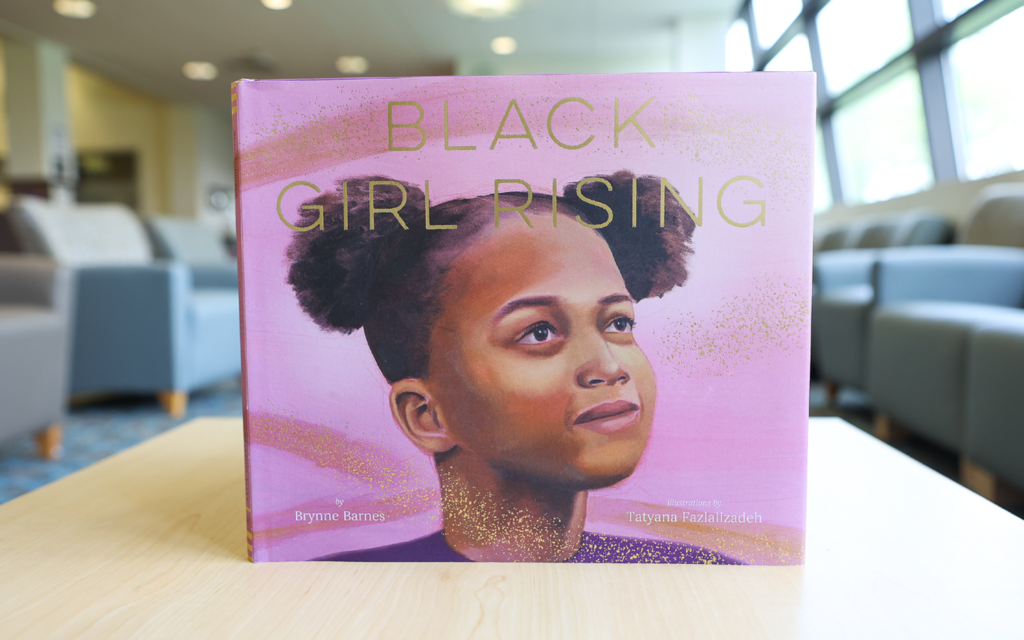
What I most want my community to know is that the Black diaspora is not just one thing, one person, or even one experience. In reference to Maya Angelou’s words, I stand as 10,000. This is the notion of what my latest book, Black Girl Rising (Chronicle Books, June 2022), honors – the journey of many through the journey of one. Black history is not something that we study; it is not in a book or one month out of the year. It is something that we live – and create – every single day.

Filed Under: Community, News Tagged With: Black History Month

February 24, 2022 by Schoolcraft College

College recognized for win-win partnership with Trinity Health

Schoolcraft College is one of four finalists in Outstanding College/Corporate Partnerships in the American Association of Community Colleges’ (AACC) 2022 Awards of Excellence.

The AACC is the primary advocacy organization for the nation’s community colleges. The Association represents more than 1,100 Associate Degree-granting institutions and more than 11 million students, and works to build a nation of learners by advancing America’s community colleges. The yearly Awards of Excellence underscore the association’s priorities and bring national visibility to promising practices among its member colleges.

Schoolcraft College is one of four finalists for Outstanding College/Corporate Partnerships

Schoolcraft College’s entry outlined how the ongoing partnership with Trinity Health has created tremendous learning opportunities for students and service to the community. This includes opportunities for clinical and practical experience for Schoolcraft College health care students within Trinity’s vast network.

Further, the Livonia Medical Center, on the northeast side of the campus, provides an array of services for community members and is literally within walking distance of the College’s new Health Sciences Center (HSC). The HSC welcomed its first students earlier this year, and by this summer all allied health programs will be housed in this facility.

“We are honored to be a finalist for the AACC 2022 Awards of Excellence,” said Dr. Glenn Cerny, President of Schoolcraft College. “We are also grateful to our friends at Trinity Health for being such stalwart supporters of Schoolcraft College and understanding the value that a strong partnership can bring to our College and to the communities we serve.

“Schoolcraft recognizes that this type of collaboration is the key to the future of student retention and our ability to maintain our high standard of rigor. The relationships that Schoolcraft College has with its community partners are necessary for the continued growth of experiential learning opportunities for our students, program growth for our service district, and sustainable revenue solutions for the institution.”

A special committee of the AACC Board of Directors selected the finalists. Winners will be announced at the Awards of Excellence Gala on May 1 during the AACC Annual April 30-May 3 in New York City.

See the complete list of finalists.

Filed Under: News, Schoolcraft Spotlight Tagged With: AACC, American Association of Community Colleges, Glenn Cerny, Trinity Health

February 24, 2022 by Schoolcraft College

Today’s entry examines the legacies of African Kings from two of the world’s most powerful and influential empires

Pharaoh Ramses II

Adapted from Ancient Egypt Online

Ramses II (aka Ramesses II, Rameses II or Sese) was the third pharaoh of the 19th dynasty. He was one of the most powerful and influential pharaohs of ancient Egypt, taking the throne of Egypt in his early 20s (around 1279 B.C.) and ruling for 66 years.

King Ramses II
Ramses II, from the collection of the New York Public Library

Architectural Accomplishments

Perhaps the best-known achievements of Ramses II are his architectural endeavors, most notable the Ramesseum and the temples of Abu Simbel. Ramses II’s interest in architecture resulted in the creation of more monuments than any of the other ancient Egyptian pharaohs. A significant number of architectural tributes attributed to Ramses II still dominate the landscape of Egypt today.

The Ramesseum is a memorial temple complex situated close to Luxor (even closer to Qurna). Although it is in ruins now, it is still recognizable for the large Pylon of Ramesses inside, which is useful as a historical document.

Pylon is the Greek word for the entrance of an Egyptian temple. The pylon is inscribed with images showing Ramesses victories over the Hittites in war, and the subsequent peace treaty that ensued. This pylon, along with other inscriptions and temples created during Ramses II’s reign, shows that this pharaoh wanted to be remembered for his influence on military, political, and religious life.

Also at the Ramesseum are the remains of a gigantic Ramses II statue. It used to be 56ft high, but now only parts of the torso and base remain. 

The Abu Simbel temples, two massive twin rock temples, were also built by Ramses II. They are situated in Nubia (South Egypt), close to Lake Nasser, and were meant to commemorate his reign, and that of his queen, Nefertari.

Another ancient city, Abydos (known for its mythological inscriptions), was used by Ramses II to record the history of his reign and that of his ancestors, providing a wealth of knowledge for future generations on the accomplishments of these pharaohs.

The well-known Ramses II statue unearthed at Memphis was thought to have been commissioned by Ramses II himself. It has shown people today how large of an impact he had on the artwork of his day. Other sites have yielded similar large Ramses II statues.

Ramses II: Military Impact

The reign of Ramses II was marked by numerous military battles, and he became one of the famous Egyptian pharaohs known for his military strength. Much of his reign was occupied with taking back territories that were lost to Egypt during the rule of other ancient Egyptian pharaohs (most notably Akhenaten). Ramses II’s army was 100,000men strong, enormous for that period in time.

Ramses II’s most famous battle is the Battle of Kadesh, which took place at the city of Kadesh (situated in present day Syria). Fought in 1274 B.C. against the Hittites, it was the largest chariot battle ever. Ramesses made a tactical error in that fight by dividing his forces, causing one of his divisions to be swept away. Eventually none of the parties gained victory and Ramesses had to retreat because of logistic difficulties.

The military genius of Ramses II helped to secure Egypt’s borders from foreign invaders and pirates along the Mediterranean and in Libya. He managed to fend off invasions from the Hittites and Nubians.

In addition, his campaigns restored land to Egypt that had been previously lost to these empires. By forming peace treaties with these empires after warring with them, Ramses II helped to solidify Egypt’s borders on all sides, allowing for increased internal stability. Many of these campaigns were completed in the first 20 years of Ramses II’s reign.

Ramses II’s Religious Impact

The religious impact that Ramses II had on Egypt is not to be overlooked, either. After reigning for 30 years, Ramses II celebrated the Sed festival, in which the king was turned into a God.

Because the people of Egypt worshiped Ramses II as a god, it also helped to ensure that his son, who at that point commanded the army, would rise to power following his death, without anyone trying to seize the throne.

Ramses and Moses

A much-debated issue of religion and history alike is the Exodus. Known as the departure of the Israelites from Egypt, this event is considered to have happened under the reign of Ramses II. Whether or not it did happen as the story tells us, scientists found evidence for the existence of the notorious 10 plagues of Egypt (or at least the first nine of them). The events do show a link to the capital city of Pi-Ramses and the grueling period Egypt crossed under the rule of Ramses II.

Ramses II’s Mummy

Ramses II was buried in the Valley of Kings, but had to be replaced because of looting. After a detour, his mummy was moved to tomb DB320, located near Deir el-Bahri, where it would be safe from tomb robbers. In 1881 his body was discovered there and moved to Cairo’s Egyptian Museum.


Mansa Musa

Adapted from National Geographic

Mansa Musa (Musa I of Mali) was the ruler of the kingdom of Mali from 1312 to 1337. During his reign, Mali was one of the richest kingdoms of Africa, and Mansa Musa was among the richest individuals in the world. The ancient kingdom of Mali spread across parts of modern-day Mali, Senegal, the Gambia, Guinea, Niger, Nigeria, Chad, Mauritania, and Burkina Faso. 

King Mansa Musa
Modern interpretation of Mansa Musa, published in the spring 2019 issue of Northwestern Magazine. Illustration by Tim O’Brien.

Mansa Musa developed cities like Timbuktu and Gao into important cultural centers. He also brought architects from the Middle East and across Africa to design new buildings for his cities. Mansa Musa turned the kingdom of Mali into a sophisticated center of learning in the Islamic world. 

Mansa Musa came to power in 1312 after the previous king, Abu Bakr II, disappeared at sea. Mansa Abu Bakr II had departed on a large fleet of ships to explore the Atlantic Ocean, and never returned. Mansa Musa inherited a kingdom that was already wealthy, but his work in expanding trade made Mali the wealthiest kingdom in Africa. His riches came from mining significant salt and gold deposits in the Mali kingdom. Elephant ivory was another major source of wealth.

When Mansa Musa went on a pilgrimage (hajj) to Mecca in 1324, his journey through Egypt caused quite a stir. The kingdom of Mali was relatively unknown outside of West Africa until this event. Arab writers from the time said that he travelled with an entourage of tens of thousands of people and dozens of camels, each carrying 300 pounds of gold. 

While in Cairo, Mansa Musa met with the Sultan of Egypt, and his caravan spent and gave away so much gold that the overall value of gold decreased in Egypt for the next 12 years. Stories of his fabulous wealth even reached Europe. The Catalan Atlas, created in 1375 by Spanish cartographers, shows West Africa dominated by a depiction of Mansa Musa sitting on a throne, holding a nugget of gold in one hand and a golden staff in the other. After the publication of this atlas, Mansa Musa became cemented in the global imagination as a figure of stupendous wealth.

After his return from Mecca, Mansa Musa began to revitalize cities in his kingdom. He built mosques and large public buildings in cities like Gao and, most famously, Timbuktu. Timbuktu became a major Islamic university center during the 14th century due to Mansa Musa’s developments. Mansa Musa brought architects and scholars from across the Islamic world into his kingdom, and the reputation of the Mali kingdom grew. The kingdom of Mali reached its greatest extent around the same time, a bustling, wealthy kingdom thanks to Mansa Musa’s expansion and administration.

See more Black History content at schoolcraft.edu/BHM

Filed Under: Community, News Tagged With: Black History Month

  • « Go to Previous Page
  • Page 1
  • Interim pages omitted …
  • Page 19
  • Page 20
  • Page 21
  • Page 22
  • Page 23
  • Interim pages omitted …
  • Page 30
  • Go to Next Page »

Primary Sidebar

    Schoolcraft College

    18600 Haggerty Road, Livonia MI 48152     
    734-462-4400     
    Answer Center

    • Search A-Z
    • Inquire
    • Visit
    • Apply
    • Register
    • Semester Guide
    • Search for Classes
    • Academic Catalog
    • Academic Dates
    • Directories
    • Ocelot Access
    • Blackboard
    • SCmail
    • SC Aware Report
    • SC Police Department
    • Careers at Schoolcraft
    • Schoolcraft Foundation
    • Accessibility
    • College Policies

    All Social Media

    Copyright © Schoolcraft College |
    Notice of Public Meetings of the Board of Trustees

    Respiratory Virus Information | SC Annual Security Report 2025 |
    Campus Safety Transparency Reporting

    Budget and Transparency Reporting

    Copyright © 2025 · SC Main on Genesis Framework · WordPress · Log in