• Skip to primary navigation
  • Skip to main content
  • Skip to primary sidebar
  • Semester Guide
  • Events
  • News
  • PPL
  • Info for Dropdown Menu
    • Parents & Families
    • Future Students
    • Current Students
    • Faculty & Staff
    • Alumni & Donors
    • Community
    • Business
  • A-Z Index
  • Ocelot Access
Schoolcraft College
  • About
  • Academics
  • Admissions & Aid
  • Life at SC
  • Community
  • Get Started
  • A-Z Index
  • Info for
  • Semester Guide
  • News
  • Events
  • Giving
 
Home / Friday’s Program Addresses Microaggression

Friday’s Program Addresses Microaggression

February 21, 2022 by

Workshop is available to all on Zoom

As Schoolcraft College continues to foster conversations around IDEA (Inclusion, Diversity, Equity, and Access), an important topic within that sphere is microaggression.

As cited in UCLA’s “Diversity in the Classroom,” the term microaggression dates to the 1970s and can be defined as follows:

Microaggressions are the everyday verbal, nonverbal, and environmental slights, snubs, or insults, whether intentional or unintentional, that communicate hostile, derogatory, or negative messages to target persons based solely upon their marginalized group membership.

To help foster better understanding of microaggression and provide some strategies and tools to deal with microaggression, Schoolcraft College’s STARS/DEI* program presents “The Bystander Imperative” from 4-5:30 p.m. on Friday, February 25. The program is open to all and can be accessed on this Zoom link with the following credentials:

  • ID: 892 2440 9271
  • Passcode: 392253

“The goal of the ‘The Bystander Imperative’ is for participants to learn about being an active bystander when witnessing microaggressions,” said Jennie Rokakis, Learning Support Services Assistant. “Participants will learn about why we don’t act, identify our personal roadblocks to action, practice techniques to intervene, and conclude with building communities of accountability.”
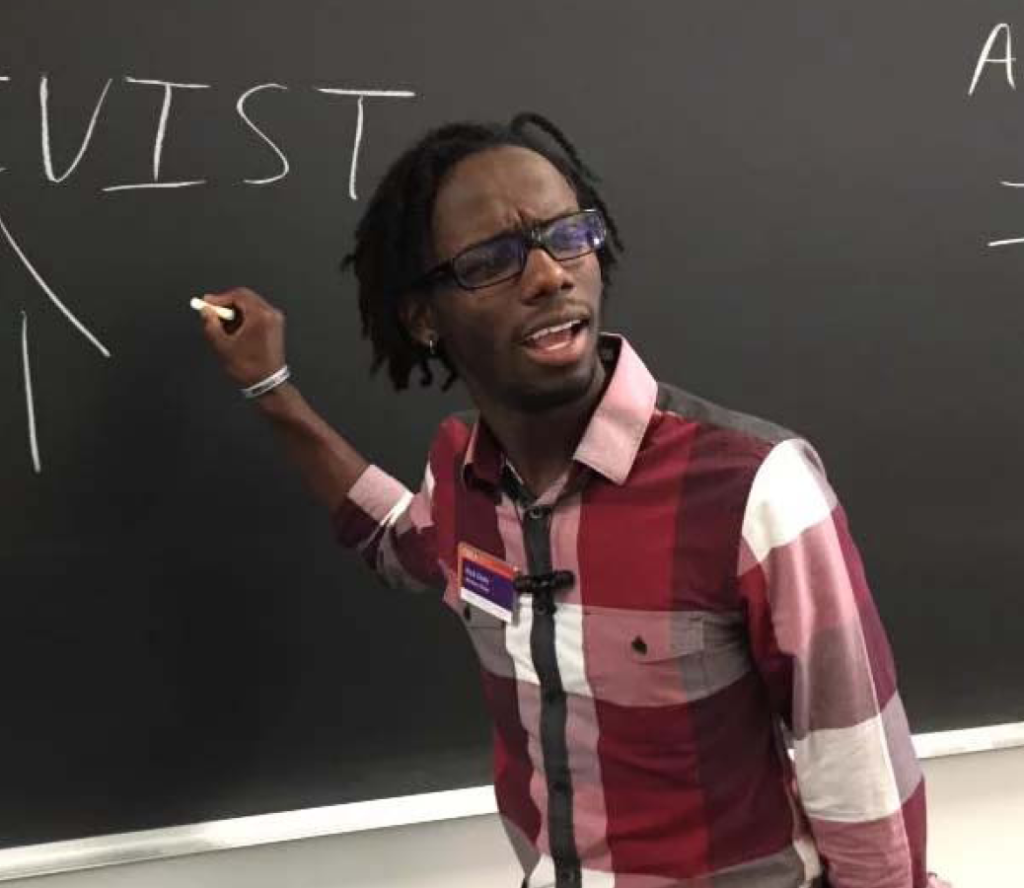
Person writing on chalkboard
Nick Daily (he/they), a Black Queer person who has been doing workshops, training, consultative, and support work for over a decade, will lead Friday’s workshop.

Leading the workshop will be Nick Daily (he/they), a Black Queer person who has been doing workshops, training, consultative, and support work for over a decade. Most recently, Daily served as Chief Diversity Officer for a large community college in California.

“One of our STARS DEI staff members attended Nick’s presentations at professional and affinity group conferences and reached out to see if he would be willing to work with the STARS DEI program on a campus-wide workshop,” Rokakis said. “After learning more about the program and Schoolcraft College, it was determined that ‘The Bystander Imperative’ was a great fit for the program and the campus’ focus on IDEA.”

Presenting “The Bystander Imperative” is the latest in a string of initiatives for the STARS/DEI program. 

“The STARS Scholars, Mentors, and Mentees recently participated in MLK Day of Service to highlight two of our core pillars – service-learning and Diversity, Equity, and Inclusion,” Rokakis said. “They participated in various service projects around Metro Detroit, including packing art supply donations at Arts and Scraps, organizing food donations with Gleaners, and crocheting hats and scarves for shelters.

Rokakis added that one student, who works in a hospital, gathered her co-workers and made gift bags for the patients. They then gave the gift bags to patients and sat and talked with them regarding Dr. King as well as reflect on history, how far we’ve come, and the work still to be done.

“This student shared that the patients were grateful for the company, and many shared their own story of growing up during the civil rights actions of the 1960s,” Rokakis said.

STARS/DEI and “The Bystander Imperative” are made possible by a generous grant from the Schoolcraft College Foundation.  

*Scholars Taking off Academically & Rising to Success (S.T.A.R.S.) Diversity, Equity, & Inclusion (DEI) Leadership Program is an opportunity at Schoolcraft College that offers unique experiences to develop students as scholars and leaders. Learn more on their web page.
Filed Under: News, Schoolcraft Spotlight Tagged With: DEI, IDEA, microaggression, Nick Daily, STARS

February 18, 2022 by Schoolcraft College

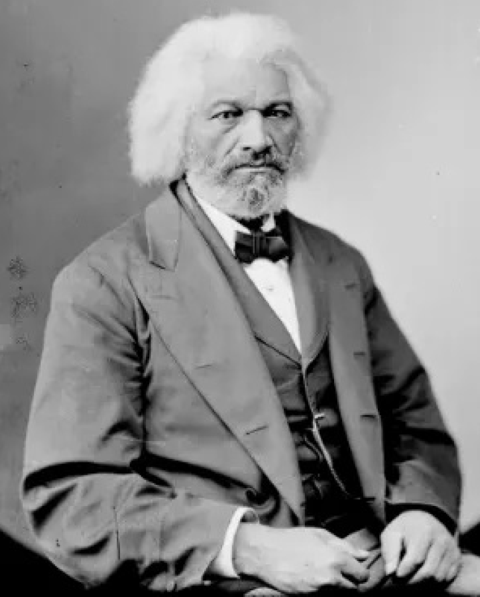
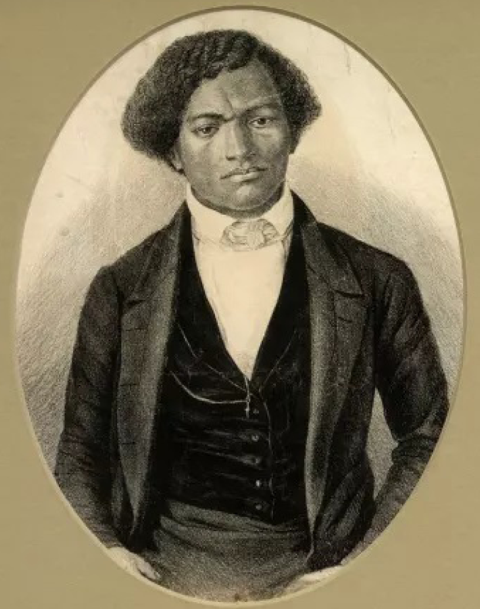
Frederick Douglass

Frederick Augustus Washington Bailey was born into slavery on the Eastern Shore of Maryland in February 1818. He had a difficult family life. He barely knew his mother, who lived on a different plantation and died when he was a young child. He never discovered the identity of his father. When he turned 8 years old, his slaveowner hired him out to work as a body servant in Baltimore.

At an early age, Frederick realized there was a connection between literacy and freedom. Not allowed to attend school, he taught himself to read and write in the streets of Baltimore. At 12, he bought a book called The Columbian Orator. It was a collection of revolutionary speeches, debates, and writings on natural rights.

  • Photo 1
  • Photo 2
Photo 1: Frederick Douglass as a statesman.
Photo 2: Frederick Douglass as a younger man.

When Frederick was 15, his slaveowner sent him back to the Eastern Shore to labor as a field hand. Frederick rebelled intensely. He educated other slaves, physically fought back against a “slave-breaker,” and plotted an unsuccessful escape.

Frustrated, his slaveowner returned him to Baltimore. This time, Frederick met a young free Black woman named Anna Murray, who agreed to help him escape. On September 3, 1838, he disguised himself as a sailor and boarded a northbound train, using money from Anna to pay for his ticket. In less than 24 hours, Frederick arrived in New York City and declared himself free. He had successfully escaped from slavery.

The Abolitionist Movement

After escaping, Frederick Douglass first lived at the Nathan and Polly Johnson house in New Bedford, Massachusetts. The home is now a National Historic Landmark.

After escaping from slavery, Frederick married Anna. They decided that New York City was not a safe place for Frederick to remain as a fugitive, so they settled in New Bedford, Massachusetts. There, they adopted the last name “Douglass” and they started their family, which would eventually grow to include five children: Rosetta, Lewis, Frederick, Charles, and Annie.

After finding employment as a laborer, Douglass began to attend abolitionist meetings and speak about his experiences in slavery. He soon gained a reputation as an orator, landing a job as an agent for the Massachusetts Anti-Slavery Society. The job took him on speaking tours across the North and Midwest.

Douglass’s fame as an orator increased as he traveled. Still, some of his audiences suspected he was not truly a fugitive slave. In 1845, he published his first autobiography, Narrative of the Life of Frederick Douglass, to lay those doubts to rest. The narrative gave a clear record of names and places from his enslavement.

To avoid being captured and re-enslaved, Douglass traveled overseas. For almost two years, he gave speeches and sold copies of his narrative in England, Ireland, and Scotland. When abolitionists offered to purchase his freedom, Douglass accepted and returned home to the United States legally free. He relocated Anna and their children to Rochester, New York.

In Rochester, Douglass took his work in new directions. He embraced the women’s rights movement, helped people on the Underground Railroad, and supported anti-slavery political parties. Once an ally of William Lloyd Garrison and his followers, Douglass started to work more closely with Gerrit Smith and John Brown. He bought a printing press and ran his own newspaper, The North Star. In 1855, he published his second autobiography, My Bondage and My Freedom, which expanded on his first autobiography and challenged racial segregation in the North.

Civil War and Reconstruction

In 1861, the nation erupted into civil war over the issue of slavery. Frederick Douglass worked tirelessly to make sure that emancipation would be one of the war’s outcomes. He recruited African American men to fight in the U.S. Army, including two of his own sons, who served in the famous 54th Massachusetts Volunteer Infantry. When Black troops protested they were not receiving pay and treatment equal to that of white troops, Douglass met with President Abraham Lincoln to advocate on their behalf.

As the Civil War progressed and emancipation seemed imminent, Douglass intensified the fight for equal citizenship. He argued that freedom would be empty if former slaves were not guaranteed the rights and protections of American citizens. A series of postwar amendments sought to make some of these tremendous changes. The 13th Amendment (ratified in 1865) abolished slavery, the 14th Amendment (ratified in 1868) granted national birthright citizenship, and the 15th Amendment (ratified in 1870) stated nobody could be denied voting rights on the basis of race, skin color, or previous servitude.

In 1872, the Douglasses moved to Washington, D.C. There were multiple reasons for their move: Douglass had been traveling frequently to the area ever since the Civil War, all three of their sons already lived in the federal district, and the old family home in Rochester had burned. A widely known public figure by the time of Reconstruction, Douglass started to hold prestigious offices, including assistant secretary of the Santo Domingo Commission, legislative council member of the D.C. Territorial Government, board member of Howard University, and president of the Freedman’s Bank.

Post-Reconstruction and Death

After the fall of Reconstruction, Frederick Douglass managed to retain high-ranking federal appointments. He served under five presidents as U.S. Marshal for D.C. (1877-1881), Recorder of Deeds for D.C. (1881-1886), and Minister Resident and Consul General to Haiti (1889-1891). Significantly, he held these positions at a time when violence and fraud severely restricted African American political activism.

On top of his federal work, Douglass kept a vigorous speaking tour schedule. His speeches continued to agitate for racial equality and women’s rights. In 1881, Douglass published his third autobiography, Life and Times of Frederick Douglass, which took a long view of his life’s work, the nation’s progress, and the work left to do. Although the nation had made great strides during Reconstruction, there was still injustice and a basic lack of freedom for many Americans.

Tragedy struck Douglass’s life in 1882 when Anna died from a stroke. He remarried in 1884 to Helen Pitts, an activist and the daughter of former abolitionists. The marriage stirred controversy, as Helen was white and 20 years younger than him. Part of their married life was spent abroad. They traveled to Europe and Africa in 1886-1887, and they took up temporary residence in Haiti during Douglass’s service there in 1889-1891.

On February 20, 1895, Douglass attended a meeting for the National Council of Women. He returned home to Cedar Hill in the late afternoon and was preparing to give a speech at a local church when he suffered a heart attack and passed away. Douglass was 77. He had remained a central figure in the fight for equality and justice for his entire life.

  • From the Frederick Douglass National Historic Site

Harriet Tubman

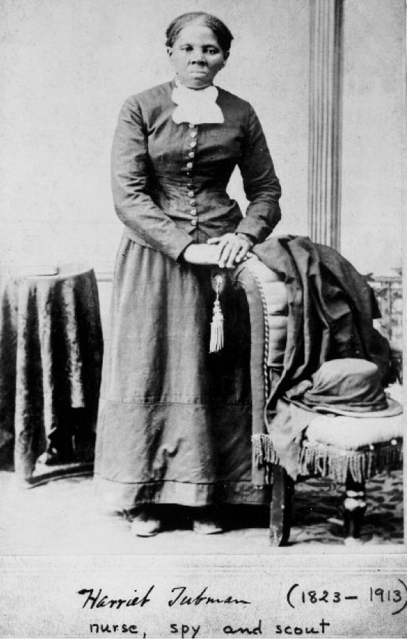
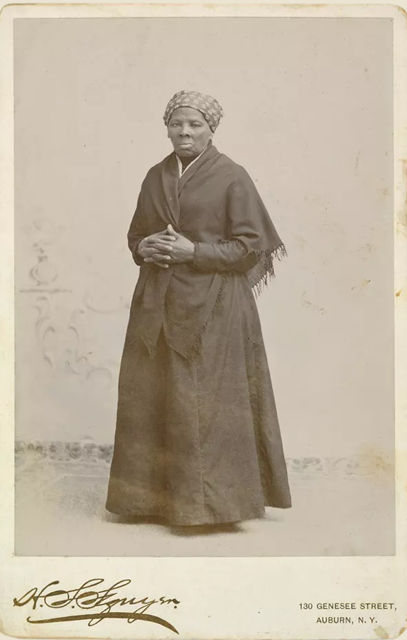
Known as the “Moses of her people,” Harriet Tubman was enslaved, escaped, and helped others gain their freedom as a “conductor” of the Underground Railroad. Tubman also served as a scout, spy, guerrilla soldier, and nurse for the Union Army during the Civil War. She is considered the first African American woman to serve in the military.

Tubman’s exact birth date is unknown, but estimates place it between 1820 and 1822 in Dorchester County, Maryland. Born Araminta Ross, the daughter of Harriet Green and Benjamin Ross, Tubman had eight siblings. By age 5, Tubman’s owners rented her out to neighbors as a domestic servant. Early signs of her resistance to slavery and its abuses came at age 12 when she intervened to keep her master from beating an enslaved man who tried to escape. She was hit in the head with a 2-pound weight, leaving her with a lifetime of severe headaches and narcolepsy.

Although slaves were not legally allowed to marry, Tubman entered a marital union with John Tubman, a free Black man, in 1844. She took his name and dubbed herself Harriet.

  • Photo 1
  • Photo 2
Photo 1: Harriet Tubman is perhaps best known as a “conductor” of the Underground Railroad. She also served as a scout, spy, guerrilla soldier, and nurse for the Union Army during the Civil War.
Photo 2: Harriet Tubman is considered the first African American woman to serve in the military.

Contrary to legend, Tubman did not create the Underground Railroad; it was established in the late 18th century by Black and white abolitionists. Tubman likely benefitted from this network of escape routes and safe houses in 1849, when she and two brothers escaped north. Her husband refused to join her, and by 1851 he had married a free Black woman. Tubman returned to the South several times and helped dozens of people escape. Her success led slaveowners to post a $40,000 reward for her capture or death.

Tubman was never caught and never lost a “passenger.” She participated in other antislavery efforts, including supporting John Brown in his failed 1859 raid on the Harpers Ferry, Virginia, arsenal.

Through the Underground Railroad, Tubman learned the towns and transportation routes characterizing the South—information that made her important to Union military commanders during the Civil War. As a Union spy and scout, Tubman often transformed herself into an aging woman. She would wander the streets under Confederate control and learn from the enslaved population about Confederate troop placements and supply lines. Tubman helped many of these individuals find food, shelter, and even jobs in the North. She also became a respected guerrilla operative. As a nurse, Tubman dispensed herbal remedies to Black and white soldiers dying from infection and disease.

After the war, Tubman raised funds to aid freedmen, joined Elizabeth Cady Stanton and Susan B. Anthony in their quest for women’s suffrage, cared for her aging parents, and worked with white writer Sarah Bradford on her autobiography as a potential source of income. She married a Union soldier Nelson Davis, also born into slavery, who was more than 20 years her junior.

Residing in Auburn, New York, she cared for the elderly in her home and in 1874, the Davises adopted a daughter. After an extensive campaign for a military pension, she was finally awarded $8 per month in 1895 as Davis’s widow (he died in 1888) and $20 in 1899 for her service. In 1896, she established the Harriet Tubman Home for the Aged on land near her home. Tubman died in 1913 and was buried with military honors at Fort Hill Cemetery in Auburn, New York.

Biography from womenshistory.org. Edited by Debra Michals, Ph.D., 2015

See more Black History content at schoolcraft.edu/BHM

Filed Under: Community, News Tagged With: Black History Month

February 17, 2022 by Schoolcraft College

To offer further opportunities to learn about key personalities and moments of the African Diaspora, Christopher Hunter, Director of Equity and Engagement, has curated a selection of videos from the “Crash Course” series.

Crash Course Black American History Preview

The Transatlantic Slave Trade: Crash Course Black American History #1

Slavery in the American Colonies: Crash Course Black American History #2

Elizabeth Key: Crash Course Black American History #3

Slave Codes: Crash Course Black American History #4

The US Constitution, 3/5, and the Slave Trade Clause: Crash Course Black American History #9

The Fugitive Slave Act of 1793: Crash Course Black American History #10

The Louisiana Rebellion of 1811: Crash Course Black American History #12

The Rise of Cotton: Crash Course Black American History #13

The Underground Railroad: Crash Course Black American History #15

Frederick Douglass: Crash Course Black American History #17

Booker T. Washington and W.E.B DuBois: Crash Course Black American History #22

See more Black History content at schoolcraft.edu/BHM

Filed Under: Community, News Tagged With: Black History Month

February 16, 2022 by Schoolcraft College

Florence Beatrice Price

The following short biography of Florence Beatrice Price is from cedillerecords.org. A more extensive biography can be found at florenceprice.com.

Florence Beatrice Price

Born in Little Rock, Arkansas, Florence Beatrice Price (1887-1953) is the first African American woman to have an orchestral piece played by a major American orchestra. Her Symphony in E Minor was performed by Frederick Stock and the Chicago Symphony Orchestra in 1933.

Price began her studies at the age of 16 with the New England Conservatory, where she earned two artist diplomas. Her early career was as an educator based in the South, first in Little Rock, AK, and then eventually as the head of the music department at Clark University in Atlanta until 1912. Following racial incidents in 1927, her family joined the Great Migration to the north and settled in Chicago.

This move led to a burst of compositional creativity and widespread recognition for Price’s compositions beginning in the 1930s. By the end of her life, Price’s works numbered over 300 (unfortunately, most remain unpublished). She is perhaps best known for her vocal works (including two songs that appear on baritone Thomas Hampson’s 2018 Cedille album, “Songs from Chicago”). Price’s Spiritual arrangements were frequently performed by singers such as Marian Anderson and Leontyne Price and remain important to the American vocal canon.

Video: Florence Price Tribute

See more Black History content at schoolcraft.edu/BHM

Filed Under: Community, News Tagged With: Black History Month

February 15, 2022 by Schoolcraft College

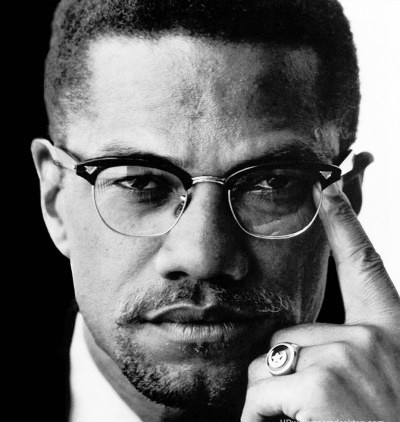
Malcolm X

Malcom X
Malcolm X

Malcolm X, or known as El-Hajj Malik El-Shabazz in the Muslim world, was one of the key figures of the Civil Rights Movement, and his legacy continues today. Born Malcolm Little on May 19, 1925, in Omaha, Nebraska, his family relocated to Lansing, Michigan. When Malcolm was 6 years old, his father Earl Little, a Baptist Minister and teacher of Marcus Garvey’s Universal Negro Improvement Association (UNIA), was murdered in Lansing. Although, local authorities made claims it was a suicide, the back of Little’s head had been smashed with a hammer before he was tied to streetcar tracks and run over.

The family could not receive a payout from Earl Little’s life insurance, as it wouldn’t pay over cases of suicide.  Malcolm’s mother Louise Little struggled to keep the family together financially. Overcome with stress and grief, she was committed to an insane asylum and the 10 children were separated between foster homes and family members. While in foster care, Malcolm excelled academically, but became disinterested in school after a teacher told him his desires to become a lawyer were unrealistic because he was Black. This led Malcolm into years of juvenile delinquency.

During a period of incarceration, Malcolm become a devoted follower of the Nation of Islam (NOI). In “The Autobiography of Malcolm X” as told to author Alex Haley, Malcolm discussed the meaning of the ‘X’ as taken by NOI members to represent the mathematical symbol signifying the unknown. This because Africans born in America through enslavement were stripped of culture, names and heritage and given the names of enslavers of their ancestors. After his release from prison in 1952, Malcolm X began his work in Detroit, expanding NOI Temple #1, and then across the county. He became a controversial figure within the Civil Rights Movement as he opposed the “Non-Violent” approach of other leaders as a sole strategy, instead promoting self-defense when appropriate.

In 1963 a rift developed between Malcolm X and senior leaders of the Nation of Islam for his activism in the Civil Rights Movement and work toward international human rights. In his Islamic pilgrimage to Mecca in 1964, Malcolm X would find the philosophy of white people being devils, as taught in the Nation Of Islam, to be a contradiction to the traditional teachings of Islam. During the pilgrimage, Malcolm met white Muslims who were opposed to the systemic oppression of Blacks in America.

This experience in Mecca guided his understanding to work with whites and other Civil Rights leaders, such as Dr. Martin Luther King, Jr. On February 21, 1965, Malcolm X was killed during his weekly address to the Organization of Afro-American Unity, a human rights organization he established. This was just seven days after he, his wife Betty Shabazz, pregnant with twins, and their four daughters were nearly killed in a fire bombing. In recent years new information, such as the Netflix series Who Killed Malcolm X?, has revealed the role of the FBI and local police units in his death.

The location of Malcolm’s murder has since been transformed into The Shabazz Center, a cultural and educational institution that harnesses the legacies of Malcolm X and Dr. Betty Shabazz to incubate social, racial, and global justice movements. You may learn more at https://theshabazzcenter.org/

See more Black History content at schoolcraft.edu/BHM

Filed Under: Community, News Tagged With: Black History Month

February 14, 2022 by Schoolcraft College

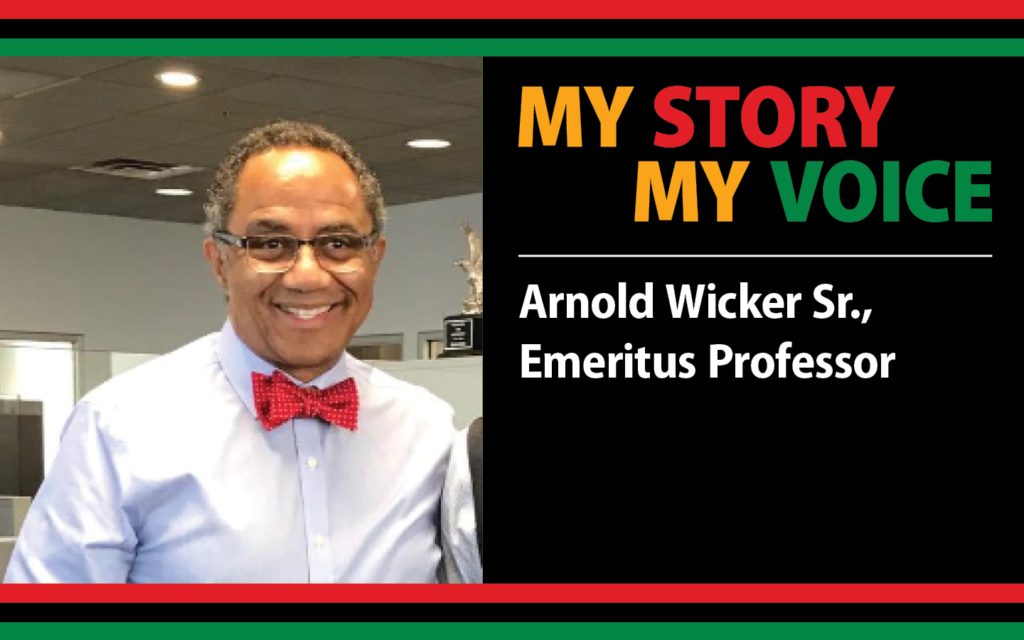
Arnold Wicker Sr., Emeritus Professor

Arnold Wicker Sr. taught several courses related to Criminal Justice for more than a decade at Schoolcraft College. This followed a distinguished 30-year career with the Detroit Police Department as Arnold retired at the rank of Commander.

To help celebrate Black History Month, we’re pleased to share “My Story, My Voice,” a series of essays written by Schoolcraft College students, faculty, staff and alumni. Please go to schoolcraft.edu/BHM to read the complete collection.

Arnold Wicker Sr.

By Arnold Wicker Sr., Emeritus Professor

Everyone has a story, which is something I have begun to embrace. Until I was given this homework assignment, I had not given any real thought as to what my story entailed. How do you condense 3 score and almost 12 years into less than a page? Everyone has a story: my students, those I encounter as I facilitate trainings, even strangers. I am grateful to reflect upon and give you this tiny part of my story.

One advantage of getting old and retiring three times allows reflection. I look back on how I became an Emeritus Professor after enjoying over 15 years in the classroom/online at Schoolcraft College and beyond. Managing an executive career in law enforcement before retiring after 30 years. Which leads me to my third and current act: Facilitating training that focuses on understanding and recognizing signs and symptoms of those who live with mental illness or are experiencing a mental health crisis. This training is for the community as a whole and specifically for first responders. The trainings are Mental Health First Aid and Crisis Intervention Teams. I get to share that we all go through something; however, “It is OK not to be OK” is an important message for everyone to receive.

I don’t have much of a story without a 91-year-old mother that while she never said you can do it, more importantly, she never said you can’t do it!

In closing, Linda Ellis asks, “Would you be proud of the things they say about how you spent your dash?” Honestly, I don’t know. But I think I will leave that part of my story to be told by someone else.

For now I will use the adage, I am not ending my journey, I am continuing it!

Filed Under: Community, News Tagged With: Black History Month

February 14, 2022 by

This peer-reviewed journal serves an important role for community colleges across the country

Learning, of course, is the goal of any college experience. Part of that education means familiarizing yourself with some unfamiliar terms. Don’t worry, we’ve got you covered.

As part of an occasional series, we’ll explain phrases, lingo or topics to add to your college vocabulary. We call it “Say What?” If there’s a topic you’d like to see covered, please send suggestions to [email protected].

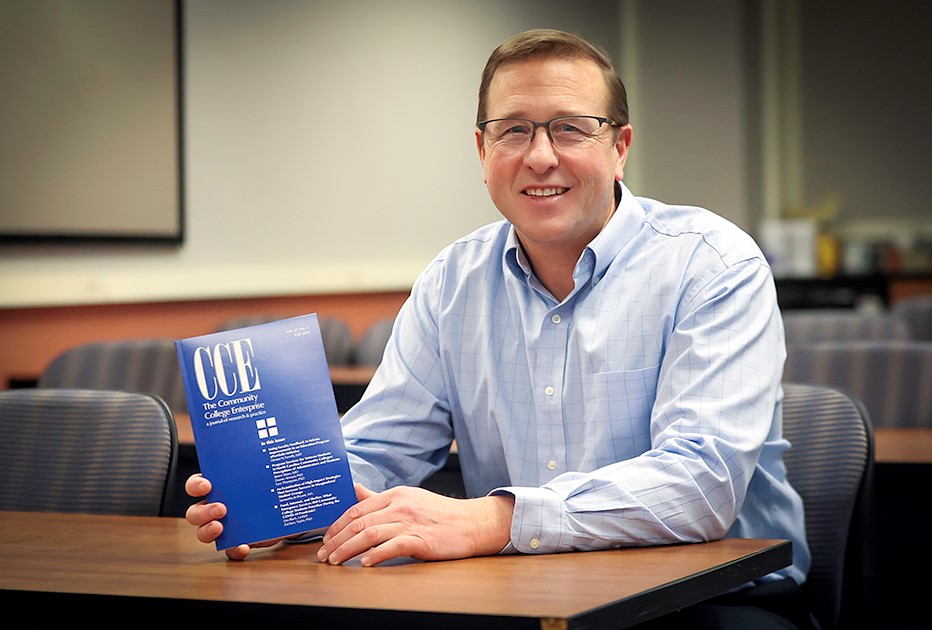
Today, we take a look at The Community College Enterprise, a small but mighty publication that Schoolcraft College has produced for 20 years. Published twice a year (spring and fall), The Community College Enterprise is the only peer-reviewed journal dedicated to community colleges that is housed within a community college.

Dr. Alec Thomson, Professor of Political Science and History, serves as Editor of The Community College Enterprise, which is published twice a year.

Dr. Alec Thomson, Professor of Political Science and History, serves as Editor. We thank him for an extensive interview that provided the information for this story.

The Community College Enterprise traces its roots to the Michigan College Journal: Research & Practice, which was first published in 1995. As interest and the audience grew, the journal was renamed to its current title in 2002 and has continued to flourish and place Schoolcraft College in a positive light.

“Launching and supporting this unique endeavor serves as a clear sign of Schoolcraft’s commitment to teaching, learning, and scholarship,” Dr. Thomson said. “No other community college is leading in the way that we are.”

At its core, The Community College Enterprise serves as an important forum for exploring and advancing an understanding of community colleges. Taken as a whole throughout its publication history, The Community College Enterprise is a repository of information with a wealth of useful data and ideas.

“Professors, administrators, and staff looking to pursue innovative projects or simply wrestle with challenges facing their institution are well-served by having a body of research assembled for reference,” Dr. Thomson said. 

“Launching and supporting this unique endeavor serves as a clear sign of Schoolcraft’s commitment to teaching, learning, and scholarship. No other community college is leading in the way that we are.”

Dr. Alec Thomson, Professor of Political Science and History, and Editor of The Community College Enterprise

While other publications of this type exist, The Community College Enterprise also distinguishes itself for its accessibility. 

“We’ve worked to curate a near complete collection of our print run online at www.schoolcraft.edu/cce with plans to fill in the remaining gaps by year’s end,” Dr. Thomson said. “Beyond our own archives, readers can find us in online databases like EBSCO, ERIC, Gale, and ProQuest. These are important resources for students and professionals who are interested in the scholarship of teaching and learning at community colleges. 

“Our focus has always been the accessibility of the publication and its proximity to the subject being studied.”

Expanding the focus

Dr. Thomson’s first role with The Community College Enterprise was as the Book Review Editor in 2005. He became Editor in 2011 and has worked to improve the publication. 

“Working closely with Gordon Krupsky (Managing Editor), I’ve tried to have The Enterprise focus on several key initiatives,” Dr. Thomson said. “First, we’ve worked to expand the scope of the journal. Today our reviewers and article submissions hail from all across the country. The journal’s early focus might have been on Michigan, but we are now a nationally recognized and focused publication. 

“Second, the expansive focus of the journal meant generating more submissions for publication. Promoting The Enterprise and making connections beyond Schoolcraft has led to an increase in the number and quality of submissions that we receive. 

“Third, in addition to receiving more article submissions, we’ve been growing our readership. We’ve rewritten and redesigned our webpages, journal layout, and promotional materials, all with the goal of making it easier and more visible for interested individuals to find us and interact with our staff. 

“While the operation relies on a panel of peer-review editors from across the country, the layout, design, review and printing of the journal are all coordinated through Schoolcraft College. Most notably, Gordon Krupsky (Managing Editor), Ione Skaggs (Graphics Designer), and Sakura Keast (Copy Editor) all have a direct hand in shaping every page of every edition.”

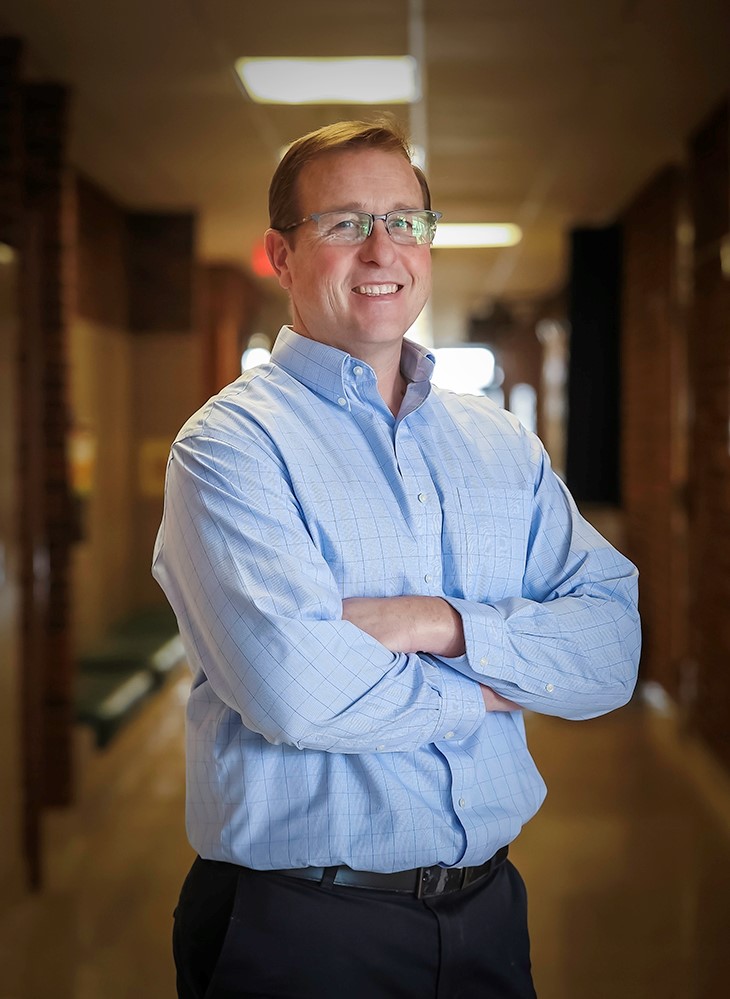
Dr. Alec Thomson leads a talented staff that produces The Community College Enterprise at Schoolcraft College.

An interesting part of looking back at all the research is seeing that many topics remain relevant today. 

“For example, the first issue of the journal (1995) featured an article regarding distance learning education,” Dr. Thomson said. “While this is now a common feature of most campuses, at the time the focus was primarily on the telecourse or interactive (satellite) classroom models. The technological tools for distance learning have undergone substantial change, but the core questions regarding best practices for teaching and learning at a distance still remain.”

(Schoolcraft College began its first distance learning courses in 1982. Look for more on our history in an upcoming story.)

Dr. Thomson thoroughly enjoys his role as Editor and looks forward to helping produce many more insightful issues of The Community College Enterprise. 

“Aside from seeing the wide-range of research and practices that are being implemented around the country, I truly enjoy looking over the work and comments of our reviewers,” Dr. Thomson said. “I often learn as much from a great reviewer’s comments, insights, and suggestions as I do from the actual article that was submitted. 

“Sometimes the takeaway is narrowly focused on some statistical test or research design matter, but in other scenarios there are broad theoretical discussions raised which can really reshape how one looks at the topic. Having this opportunity to constantly learn and observe the work of others is very rewarding.”

Please visit their website for more information on The Community College Enterprise. Scholars interested in serving on the peer-review board or having the work published can email [email protected] indicating their interest.

Filed Under: News, Schoolcraft Spotlight Tagged With: Alec Thomson, Community College Enterprise, community colleges, publication

February 11, 2022 by Schoolcraft College

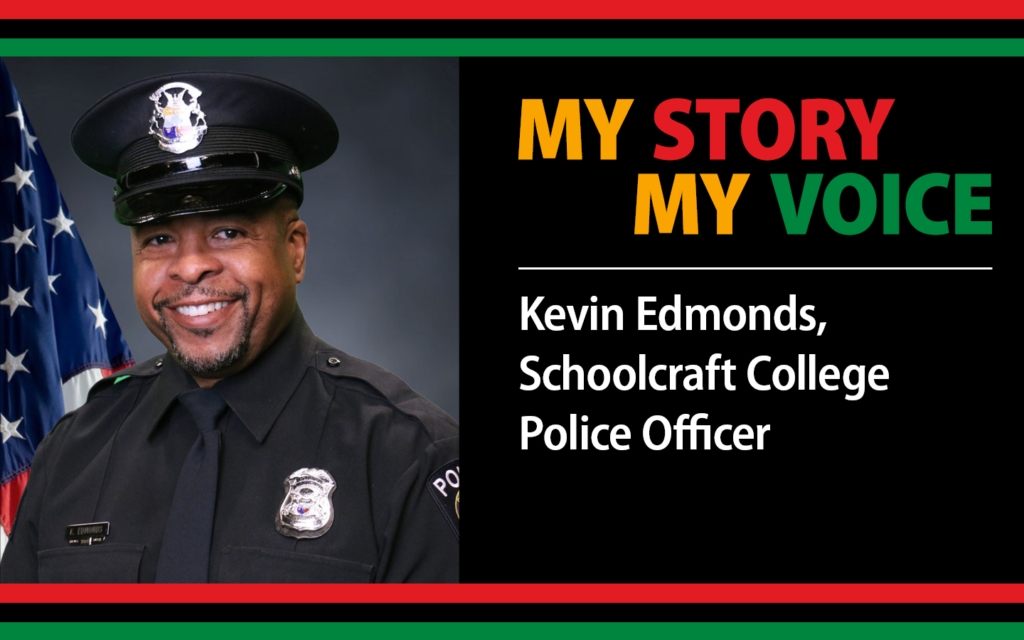
Kevin Edmonds, Schoolcraft College Police Officer

Kevin Edmonds joined the Schoolcraft College Police Department in November of 2014. He previously served with the Detroit Police Department and the city of Oak Park’s Public Safety Department.

To help celebrate Black History Month, we’re pleased to share “My Story, My Voice,” a series of essays written by Schoolcraft College students, faculty, staff and alumni. Please go to schoolcraft.edu/BHM to read the complete collection.

Kevin Edmonds

By Kevin Edmonds, Schoolcraft College Police Officer

I grew up on the west side of Detroit in the shadow of famed Kronk Gym. I grew up in a neighborhood where neighbors knew you by name, and everyone looked out for each other. One of the values that was instilled in me as a child by my mom was the “Golden Rule”: Treat everybody the way you want to be treated. I have lived by that mantra in both my personal and professional life.

After graduating from Henry Ford High School, I began working for Ford Motor Company before starting my career in public service with the Detroit Police Department (DPD) in 1989. I worked for DPD for two years and was laid-off. Unemployment was short-lived, as just weeks after being laid-off, I was hired by the City of Oak Park’s Public Safety Department (OPDPS). I served the Oak Park DPS for 23 years, retiring in October of 2014.

As with my time being laid-off, my retirement was also short-lived. Within weeks after I retired, I was hired by the Schoolcraft College Police Department (SCPD) in November of 2014. Not a bad retirement gig at all!

Entering into my eighth year at SCPD, I have enjoyed my job here at Schoolcraft College thus far. I enjoy coming to work, my co-workers at SCPD, the staff and faculty at the college. I enjoy what I do on a daily basis here at Schoolcraft College assisting students, staff, and guest of Schoolcraft College.

In conclusion, working at SCPD has inspired me to return to college to complete the last 10 credits of my bachelor’s degree program. My goal is to complete my degree work to walk across the stage this December. Wish me luck!

Filed Under: Community, News Tagged With: Black History Month

February 10, 2022 by Schoolcraft College

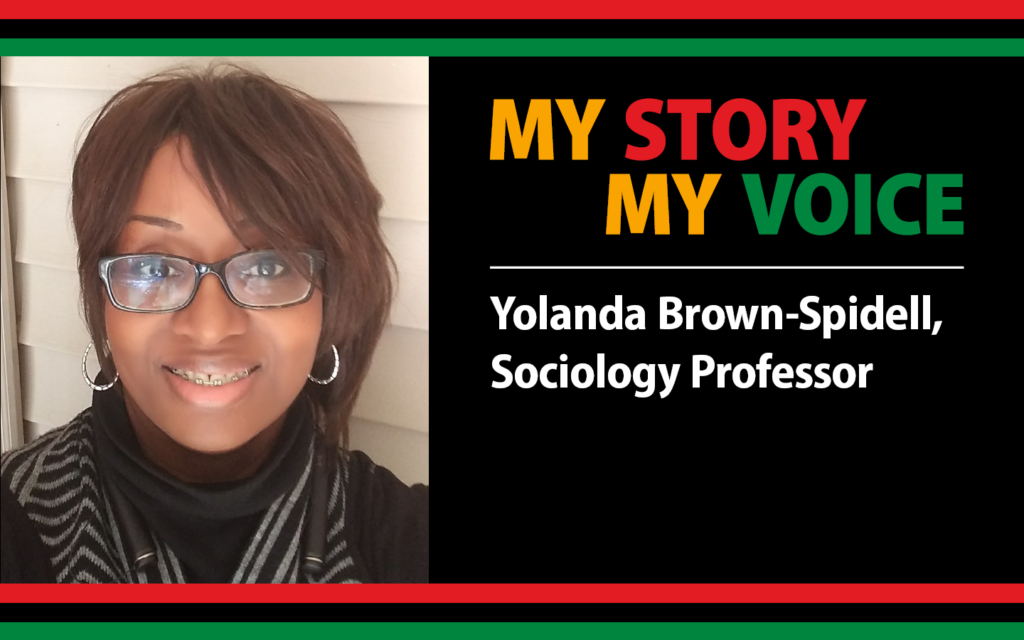
Yolanda Brown-Spidell, Sociology Professor

Yolanda Brown-Spidell is a recent hire at Schoolcraft College in the department of sociology (2021). She is an educator with over 20 years of teaching and educational leadership in both Detroit and metro Detroit.

To help celebrate Black History Month, we’re pleased to share “My Story, My Voice,” a series of essays written by Schoolcraft College students, faculty, staff and alumni. Please go to schoolcraft.edu/BHM to read the complete collection.

Yolanda Brown-Spidell

By Yolanda Brown-Spidell, Sociology Professor

How does a little Black girl who grew up in Detroit and did not get serious about school until she was a 29-year-old unhappily married mother of two who returned to school at a community college in San Diego end up teaching sociology in Livonia, which is historically known as a sundown town? Only in America.

How does a divorced mother of five find herself as caregiver to both her mother and her father until they died and she had the honor of eulogizing them both? Only by the grace of God.

How does a girl who was raised by two Black parents that graduated from a “colored” high school in Mobile, Alabama, be the mother of a daughter who is on the cusp of graduating from Harvard? Only in America and by the grace of God.

I am my ancestors’ dream, but there are days when the dream can feel like a nightmare. As a sociologist, I have the language and the cultural awareness to acknowledge, understand and interpret what it means to be “Black in America.” I am acutely aware of my minority status in a majority reality. I wear my badge of “Professor Yolanda” with an interesting mixture of pride, humility, and fear. Pride, because this is a personal life goal that has been achieved. Humble, because I recognize that I don’t stand in this space on my own. I stand here because of the blood, tears and lives that were given for me to have the right to acquire the education that gave me the key to unlock this door. Fearful, because the message I teach will be as vinegar to the soul of some and honey to the soul of others.

So I stand as professor, but the little Black girl from Detroit is always present with me.

Filed Under: News Tagged With: Black History Month

February 9, 2022 by Schoolcraft College

Keith Dawkins, Design Release Engineer and Alumni

Keith Dawkins is a Design Release Engineer for General Motors. He has experience in embedded controls, calibration, and managing programs from design to launch. His hobbies include golf, traveling and exercise. He hopes one day to complete a half-marathon.

To help celebrate Black History Month, we’re pleased to share “My Story, My Voice,” a series of essays written by Schoolcraft College students, faculty, staff and alumni. Please go to schoolcraft.edu/BHM to read the complete collection.

Keith Dawkins

By Keith Dawkins, Design Release Engineer and Alumni

My time at Schoolcraft College ended on a high note. I graduated with a great GPA, won several awards and recognitions, was the Graduation Marshall for my class, and was accepted to U of M’s Electrical Engineering program. My family was proud of me. This was the second chapter of my life after a long battle with cancer, and things were looking up. Graduating from community college was a rare time in my life that I had finished something I had started. It felt good. I was looking optimistically at the future.

My first semester at U of M was challenging. I was enrolled in two of the program’s “weed out” classes: EECS 280 (C++) and EECS 215 (circuits). It was a challenge learning to study differently, not to mention the volume of work, but my classmates and I pushed through. I think we all experienced a paradigm shift in this manner. I began to feel optimistic about the semester when a remnant from the past crept up. I was admitted to the hospital with complications from my previous cancer battle. I was only gone a week, but that’s a lifetime in college studies. I struggled to catch up with my classes and was successful in all but one – EECS 280. I never could regain my footing and subsequently failed the class.

The rest of my time at U of M was met with successes. I earned excellent grades in my classes – even when I retook EECS 280. I was on a roll. Then one day I received the call that we all dread. My mother had passed. The grief was enormous, and I left school to be with my family. After the initial shock of grief, I was comforted by the fact that my mom was so proud to see me finally excelling in life. I was determined to push through and graduate in her honor – which I did in 2015 at the young age of 45.

These days I use what I learned in my schoolwork to develop technologies for electric vehicles. I have had several engineering jobs at General Motors since I graduated, and now I design and launch computer modules for EV SUVs. I am married with three children, and I reside in Farmington Hills. The second chance at life has been both challenging and fulfilling. I wouldn’t have it any other way.

Filed Under: Community, News Tagged With: Black History Month

February 8, 2022 by Schoolcraft College

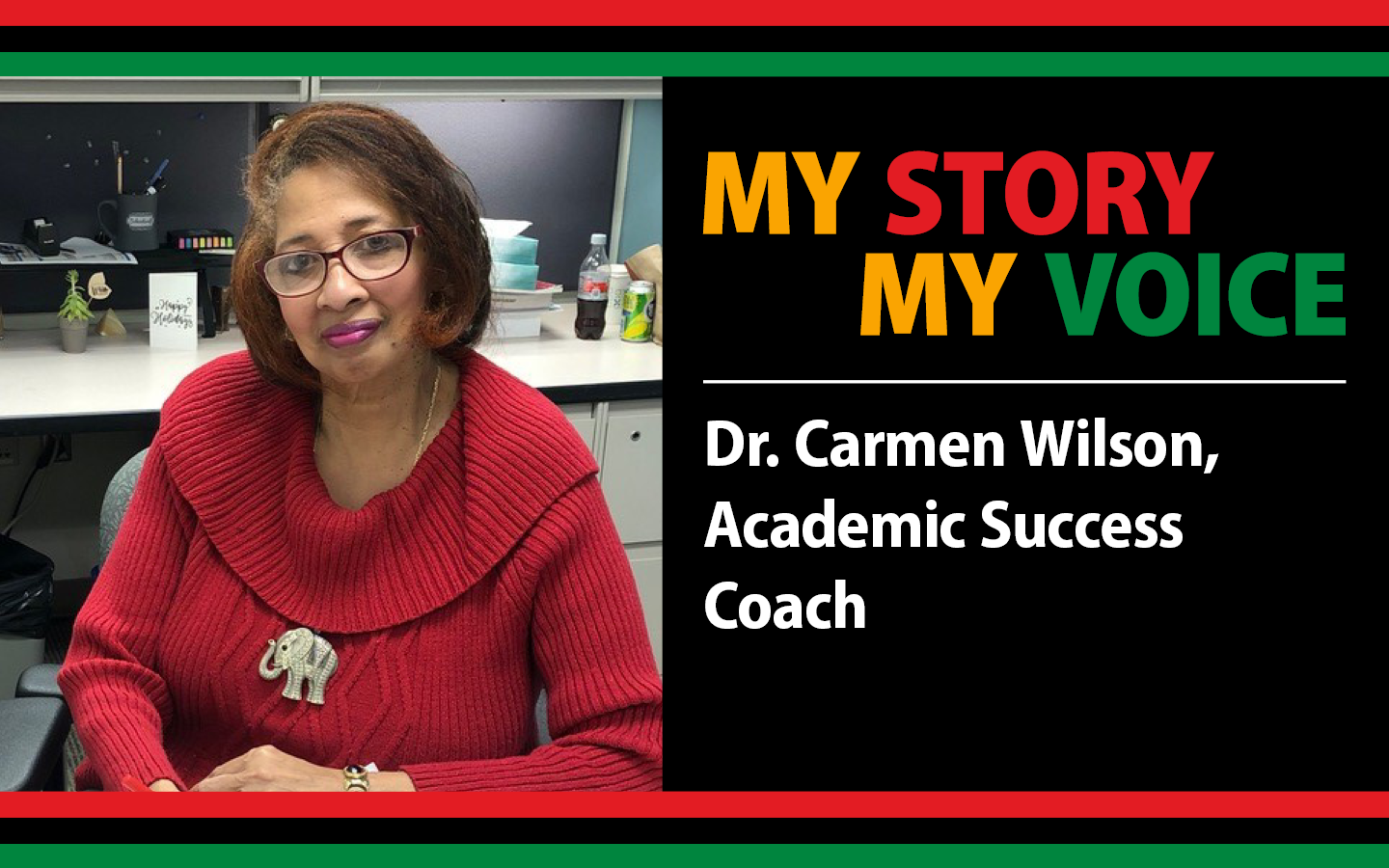
Dr. Carmen Wilson, Academic Success Coach

Dr. Carmen Wilson joined Schoolcraft College in 2016, specializing in the disciplines of reading, study skills, and developmental education. She provides individual coaching for students and facilitates group sessions for class visits, TEAS Test Prep, and the Detroit Promise Cohort. Dr. Wilson is the Coordinator for the STARS DEI Leadership Program. Her mantra is, “I am your champion, cheerleader, and accountability partner, helping students soar academically.”

To help celebrate Black History Month, we’re pleased to share “My Story, My Voice,” a series of essays written by Schoolcraft College students, faculty, staff and alumni. Please go to schoolcraft.edu/BHM to read the complete collection.

Dr. Carmen Wilson

By Dr. Carmen Wilson, Academic Success Coach

My passion for teaching began at age 6, when, after returning from a day at school I would retreat to my bedroom and line up my dolls across the bed to play teacher, mimicking the instructional style seen earlier in the day. This anecdote, constantly told by my mother, who delighted in relating these events, was her way of showing the pride she felt in my academic accomplishments.

I was raised in a strong, faith-based, Christian family. Our family’s weekly attendance at the Historic Second Baptist Church of Detroit was not negotiable! My father worked two jobs, and my mother stayed at home with my younger brother and I. Their combined support was there for all activities and classes in which we were involved. Fostering my love for reading was done by a weekly walk to the Detroit Public Library Mobile Unit.

A graduate of Michigan State University, my first job was as a Social Studies teacher. I have subsequently filled the professional roles in K12 including teacher, coordinator, academic dean, assistant principal, and principal. My Doctorate in Leadership and Policy Studies provided the segue into higher education. First in my family to attend college, I was blessed to have my parents, son, and closest friends witness me cross the stage at Wayne State University.

My passion has always been to help students achieve academic excellence. My path led me to the field of developmental reading, writing, composition, and academic support. On February 22, 2016, I became a Faculty Facilitator (now Academic Success Coach) at Schoolcraft College. Initially the only African-American female in the Learning Support Services department, I readily identified with the obstacles that beset underrepresented, first-generation populations and worked to create a mentorship program, specifically aimed at helping first-year college students. With the support of Associate Dean Melissa Schultz, the Scholars Taking Off & Rising To Success (STARS) Program was launched during the fall of 2019.

The success of the pilot STARS Program is shown by the anonymous donor, renewing it for the 2021-2022 academic school year. The STARS Diversity, Equity, and Inclusion (DEI) Leadership Program is based on four pillars: Academic, Leadership, Service-Learning, and Diversity, Equity, Inclusion, and Social Justice. This initiative is designed to provide a wealth of knowledge, a plethora of diverse experiences, promote a catalyst for change at Schoolcraft and the community at-large for two scholars, two mentors, and ten mentees. Indeed, it has been my pleasure and honor to serve as the Coordinator of STARS DEI Leadership Program, a very viable value-added entity at Schoolcraft College. I am excited by the prospect of expanding the program as well as seeing the creative and innovative campus-wide events our STARS scholars will implement.

Filed Under: Community, News Tagged With: Black History Month

February 7, 2022 by Schoolcraft College

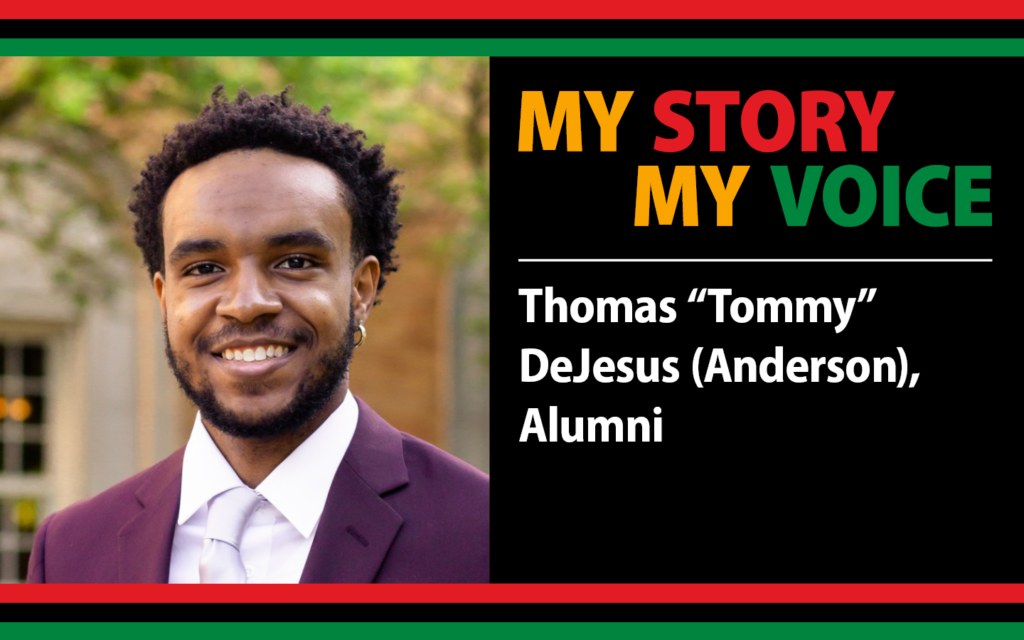
Thomas “Tommy” DeJesus (Anderson), alumni

Thomas “Tommy” DeJesus (Anderson) has been a community organizer for seven years. A graduate of the University of North Texas in Integrative Studies, he’s currently writing his memoir, which will be released this year.

To help celebrate Black History Month, we’re pleased to share “My Story, My Voice,” a series of essays written by Schoolcraft College students, faculty, staff and alumni. Please go to schoolcraft.edu/BHM to read the complete collection.

Thomas DeJesus

By Thomas “Tommy” DeJesus (Anderson), alumni

 “Life for me ain’t been no crystal stair” – Mother to Son by Langston Hughes. Truer words have never been spoken. Though I smile outside, my inner thoughts contain memories of a childhood marred by violence and death with a mix of nostalgia.

My parents’ wishes came true as I was born at 11:11 p.m. My mother had already suffered a miscarriage a few years earlier. She was told that the chances of her giving birth were slim. I was born with Meconium Aspiration Syndrome, one of the leading causes of infant mortality. In Detroit – where I was born – the infant mortality rate is so high it rivals the war-torn country of Libya. As an occupational therapist, she was well aware of the odds that Black mothers often faced in dealing with hospitals. Nevertheless, she still persevered, and I was able to pull through without any issues.

I grew up in Farmington Hills. Like Livonia, Farmington Hills represented one of several white flight towns in Metro Detroit during the mid-20th century. I grew up in a majority Black and Asian neighborhood created through exclusionary zoning in the 1990s. My parents were deep believers of the Christian faith and decided to send me to a Christian school, hoping I’d receive a better education there than a public school. Big mistake.  

Racial epithets and insensitivity flew from the mouths of my “Christian” teachers, classmates, and their parents with impunity. I assumed the treatment I received was normal, so I never complained to my parents. However, my mother saw it and did everything she could to fight it. With her help, the school instituted their first ever Black History Month program my 1st grade year.

In my 3rd grade year, she began her own fight with pulmonary hypertension, which ultimately took her life on November 12, 2008. As a result, my father became a single father and the racial torment worsened as we entered the Obama era. Nonetheless, like her during my birth, I persevered.

Over 10 years later, her legacy lives on through me. Today, I continue to serve humanity by promoting Black unity and self-love. “There is no better than adversity. Every defeat, every heartbreak, every loss, contains its own seed, its own lesson…” – Malcolm X.

Filed Under: Community, News Tagged With: Black History Month

  • « Go to Previous Page
  • Page 1
  • Interim pages omitted …
  • Page 24
  • Page 25
  • Page 26
  • Page 27
  • Page 28
  • Interim pages omitted …
  • Page 33
  • Go to Next Page »

Primary Sidebar

    Schoolcraft College

    18600 Haggerty Road, Livonia MI 48152     
    734-462-4400     
    Answer Center

    • Search A-Z
    • Inquire
    • Visit
    • Apply
    • Register
    • Semester Guide
    • Search for Classes
    • Academic Catalog
    • Academic Dates
    • Directories
    • Ocelot Access
    • Blackboard
    • SCmail
    • SC Aware Report
    • SC Police Department
    • Careers at Schoolcraft
    • Schoolcraft Foundation
    • Accessibility
    • Consumer Info

    All Social Media

    Notice of Public Meetings of the Board of Trustees |
    SC Annual Security Report 2026

    Campus Safety Transparency Reporting |
    Respiratory Virus Information |
    Campus Hazing Transparency & Resources


    Budget and Transparency Reporting


    Copyright © 2026 · SC Main on Genesis Framework · WordPress · Log in