• Skip to primary navigation
  • Skip to main content
  • Skip to primary sidebar
  • Semester Guide
  • Events
  • News
  • PPL
  • Info for Dropdown Menu
    • Parents & Families
    • Future Students
    • Current Students
    • Faculty & Staff
    • Alumni & Donors
    • Community
    • Business
  • A-Z Index
  • Ocelot Access
Schoolcraft College
  • About
  • Academics
  • Admissions & Aid
  • Life at SC
  • Community
  • Get Started
  • A-Z Index
  • Info for
  • Semester Guide
  • News
  • Events
  • Giving
 

Schoolcraft College

July 19, 2021 by Schoolcraft College

This piece of high-tech equipment is used in Biology and Metallurgy courses

It sits quietly in Room 175 of the Biomedical Technology building, exuding a formidable presence even when not in operation. Weighing more than 1,800 pounds – nearly a ton – it stands almost 6 feet tall on its pedestal and is approximately 2 ½ feet long and 3 feet deep.

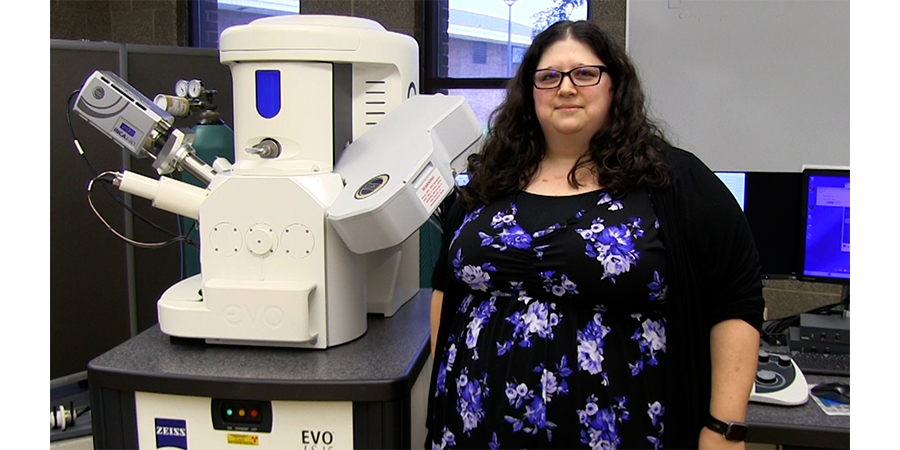
In the scientific and technical community, it’s called the Zeiss Evo LS 15. Less formally, it’s the College’s scanning electron microscope and has been here since 2008.

Melissa Gury, Director of Laboratory Sciences, has been working with the scanning electron microscope, or SEM, since 2014. She’s eager to share its abilities with an even wider audience.

“It’s very rare for a community college to have such a high-tech, industry-standard piece of equipment like this,” Gury said. Gury said she didn’t know of any area community colleges that have an SEM and that some four-year schools and even businesses seek out Schoolcraft to use it.
View a video about the SEM

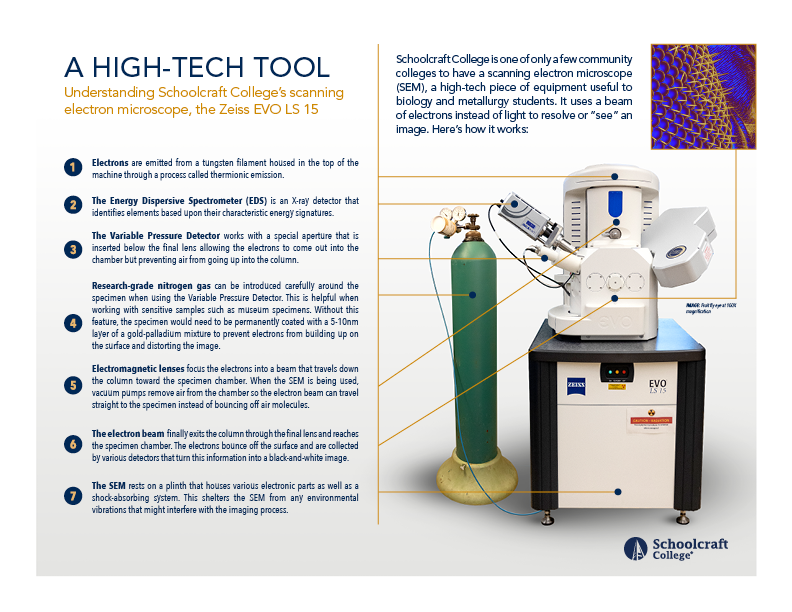
Infographic pointing out the microscope features
This infographic points out the key features of the scanning electron microscope at Schoolcraft College and how this piece of high-tech equipment works.

What is an SEM?

Unlike the microscope that you might have used in high school biology, a scanning electron microscope uses a beam of electrons instead of light to “see” an image. The process, as explained by Gury, works like this:

  • SEMs contain electromagnetic lenses that focus the beam of electrons, which is passed across the surface of a specimen.
  • Electrons bounce off the surface of the specimen and are collected by various detectors that turn this information into a black-and-white image.
  • Vacuum pumps physically remove air from the chamber so that the electron beam can travel straight to the specimen instead of bouncing off air molecules.
  • This normally means that to use a traditional detector, the specimen has to be completely dried.
  • If it is not conductive, it has to be coated in a very small (5-10 nm) layer of a gold-palladium mixture.
  • Schoolcraft’s SEM has a Variable Pressure Detector and a special aperture that is inserted below the final lens allowing the electrons to come out into the chamber but preventing air from going up into the column.
  • This allows the SEM to introduce a small amount of research-grade nitrogen gas around the surface of the specimen, meaning the specimen does not have to be completely dry or covered with any other materials.
  • This can be especially helpful when working with something like a museum specimen or some other item that is rare so it is not harmed during the imaging process.

“Typically, at a university, a student would have to be in a 400-level course or even in graduate school before using a scanning electron microscope.”

Melissa Gury, Director of Laboratory Sciences

What classes use it?

Two classes currently use the SEM: BIOL 140 (Scanning Electron Microscopy) and MET 248 (Metallurgy and Materials Science).

Here’s the course description for BIOL 140, which does not require a prerequisite:

This course emphasizes the principles and modes of operation of the scanning electron microscope and X-ray analysis systems, electron-specimen interactions, elemental analysis, effects of microscope variables on images, image processing, routine maintenance, the use of microscope accessories and digital outputs. In the laboratory, students will prepare and examine inorganic and organic specimens using the secondary, backscatter and variable pressure detectors of the SEM. Students complete a project consisting of the preparation, imaging and analysis of a biological specimen.
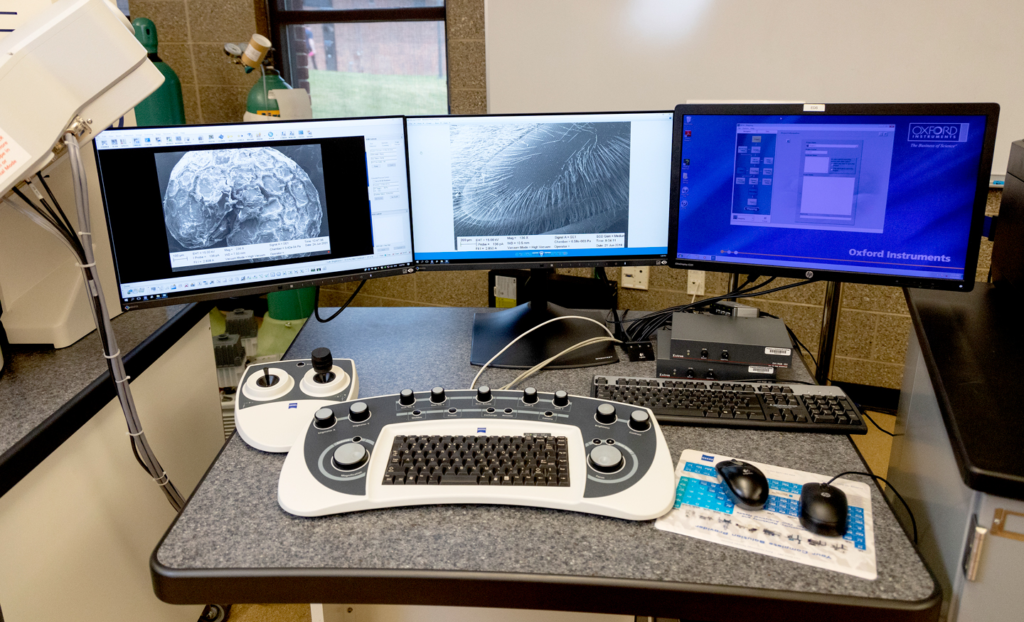
  • Photo 1
  • Photo 2
  • Photo 3
  • Photo 4
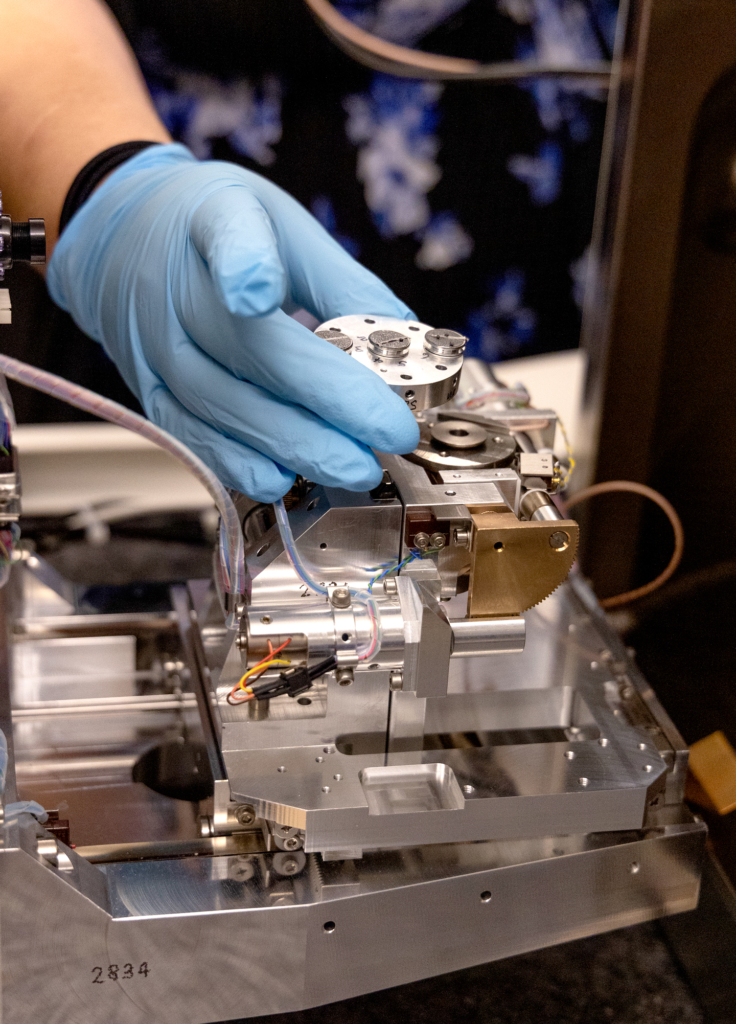
Photo 1: Schoolcraft College’s scanning electron microscope can reveal a stunning amount of detail.
Photo 2: A specimen is placed in the scanning electron microscope in the Biomedical Technology building at Schoolcraft College.
Photo 3: Melissa Gury, Director of Laboratory Sciences, with Schoolcraft College’s scanning electron microscope.
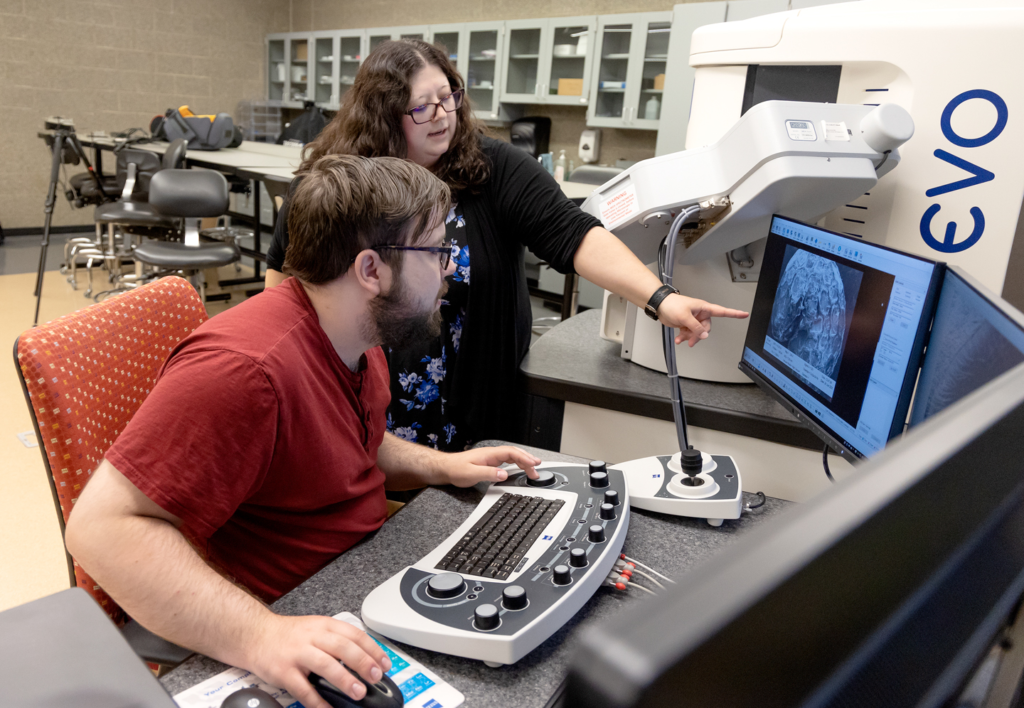
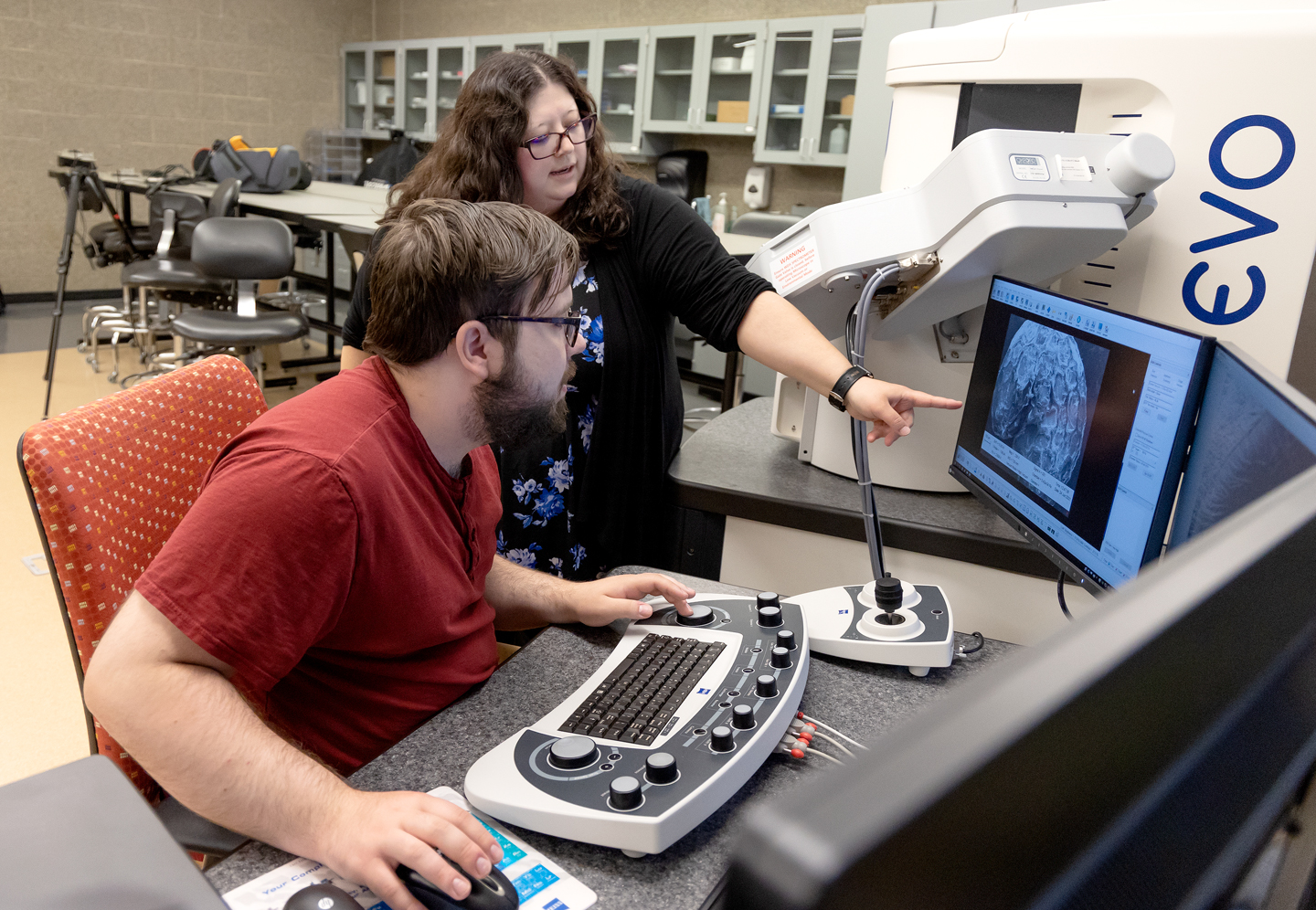
Photo 4: Melissa Gury instructing: Melissa Gury, Director of Laboratory Sciences, instructs on how to examine a specimen in the scanning electron microscope at Schoolcraft College.

“Typically, at a university, a student would have to be in a 400-level course or even in graduate school before using a scanning electron microscope,” Gury said. “With BIOL 140, we’re able to expose our students to amazing technology early in their academic path.”

Here’s the course description for MET 248, which requires MET 153 or department consent:

This course introduces the fundamentals of Scanning Electron Microscopy (SEM) and X-ray Microanalysis used for materials characterization and failure analysis. Topics include microscopy systems and components, safety and maintenance, applications in fractography and materials characterization and failure analysis.

Who else could use it?

Biology researchers as well as businesses and industries connected to metallurgy, geology, forensics and more all could find Schoolcraft College’s scanning electron microscope highly useful. For example, Schoolcraft College is currently assisting an area university student with research into diseases that affected amphibians. (The disease does not affect humans.) The student is able to examine rare museum specimens in a nondestructive manner to perform the research.

Business and industry that need to analyze parts or assemblies for fractures rely on scanning electron microscopes as well. The SEM can analyze the elemental composition, though not the actual “recipe” of components.

“Our scanning electron microscope is another example of how Schoolcraft College is providing the equipment and training to prepare our students for high-tech careers,” Gury said.
Filed Under: News, Programs Tagged With: biology, metallurgy, Scanning electron microscope

July 19, 2021 by Schoolcraft College

He is one of only 72 Certified Master Chefs in the world

Today for “Faculty Spotlight” we’re sitting down with Brian Beland, a Certified Master Chef and our new Culinary Arts Department Chair. He also serves as the Executive Chef at Country Club of Detroit, which has earned distinction as a Platinum Club of America.

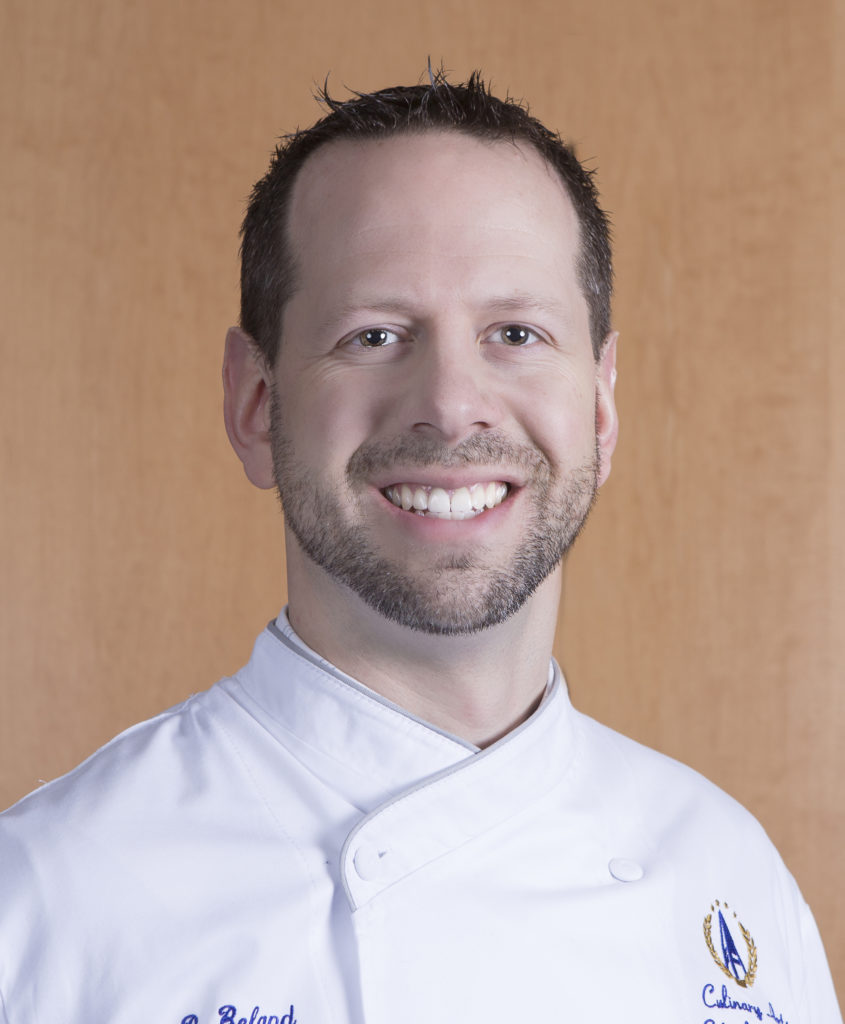
Chef Beland
Brian Beland was recently named the Culinary Arts Department Chair.

Schoolcraft College: Hello, Chef Beland, and congratulations on your new role! To start out, could you please tell us about your position at Schoolcraft College, how long you have been with us and what classes you teach?

Brian Beland: Thank you and I appreciate the opportunity to be featured and represent the Culinary Team at Schoolcraft College. I was fortunate to join the Schoolcraft Culinary Team in January 2014. To be honest, I’m still learning on the job the many facets and roles of our department. Some of the highlight responsibilities include continuing the longtime tradition of culinary excellence and pursuit of a hospitality-first culture. I want to be a resource for the students and team members who make the Schoolcraft Culinary experience special and unique. And I want to be both a visionary and facilitator for short- and long-term curriculum and facilities planning for the department.

“The culinary industry and the educational model has been through so much change the last 10 to 15 years. We recognize that we need to maintain our standard of excellences, but also need to review what we are focusing on and how we are providing that to the students.”

Brian Beland, Culinary Arts Department Chair

SC: Please tell us a little about how one becomes a Certified Master Chef. What does attaining that achievement entail?

Brian Beland: For me, the Certified Master Chef process represents a commitment to lifelong learning and self-development. The process itself starts with a dedication to the personal development and refinement of cooking techniques, cuisine philosophy, time management and the desire for continuous improvement. The mindset carries through not only in the kitchen but in all aspects of personal and professional life. The exam itself is an eight-day practical cooking exam supported by levels of professional experience and education. The cooking practicals include: Nutritional, Cold Food Garde Manger, Classical Cuisine, Global Cuisines, Freestyle, Baking and Pastry, Continental European Cuisine and a Market Basket Final.

SC: What prompted your interest in the culinary arts? Did you always want to be a chef?

Brian Beland: In high school I became introduced to the kitchen. Initially, it was not the career path I through I would choose, but after some positive experiences and learning about myself along the way, I couldn’t see myself anywhere else. I chose Michigan State’s Hospitality Business program as an opportunity to continue working in kitchens and also obtain some business background education. I chose all my externships in the kitchen, with my Level 2 experience at Country Club of Detroit. It was in that kitchen I found myself committing myself to the craft and profession. I enjoyed the hustle, the stress, the continual push to get better. It replaced team sports that I had been accustomed to participating in.

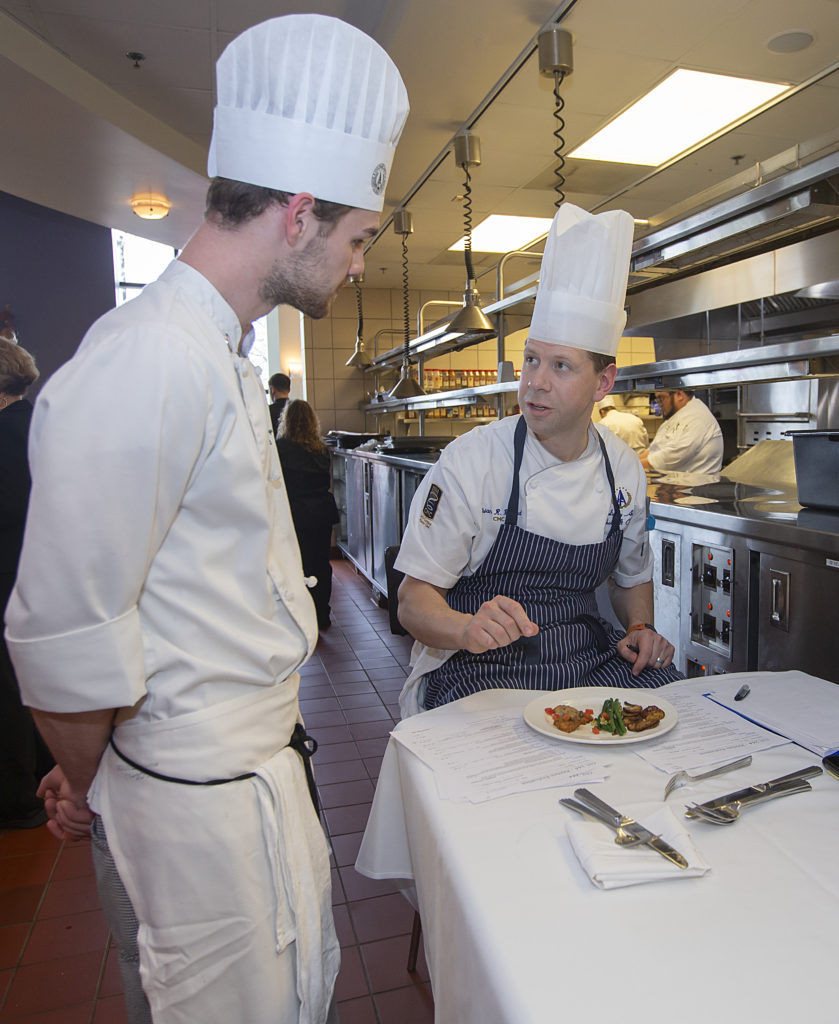
Chef Beland teaching teaching a student in the kitchen
Brian Beland has taught at Schoolcraft College since 2014.

SC: Culinary Arts is perhaps the best known program at Schoolcraft College. What is your vision and what are your goals for the department as we move forward?

Brian Beland: Our team’s vision is a pursuit of continuous excellence and preparing the students to be ready to take positions in industry. An initial goal for our team this year is to reboot our program, enrollment and restaurant services as we come out of a difficult one-month stretch that drastically disrupted the hospitality industry. At the same time, we have been working diligently this year on our curriculum. The culinary industry and the educational model has been through so much change the last 10 to 15 years. We recognize that we need to maintain our standard of excellences, but also need to review what we are focusing on and how we are providing that to the students.

SC: What do you like best about teaching at Schoolcraft College?

Brian Beland: Schoolcraft is an amazing place to be associated with. Our kitchen labs are built for individual student learning, allowing us as instructors to provide the opportunity for each student to cook and develop individual skills. As we move into the second year part of the program, students can take the fundamental development learned in year one and apply those skills to full-service restaurant operations and work as a team. It’s a privilege to be a part of a team and institution where the College, administration, Board of Trustees and community all believe in our vision and support our various offerings.

SC: Thank you, Chef Beland. Is there anything else you would like to add?

Brian Beland: Thank you! We look forward to seeing everyone back in the fall!

Filed Under: News, Schoolcraft Spotlight Tagged With: CMC, Country Club of Detroit, Culinary Arts

July 19, 2021 by Schoolcraft College

The facility has membership opportunities available for community members

Summer is in full swing and so is the action at Schoolcraft College’s Fitness Center, which offers many familiar and favorite activities as well as some new options, such as open basketball on the Ocelots’ home court.

“We encourage the Schoolcraft College community and members of surrounding communities to take a look at what we have to offer,” said Patty Donohue-Ebach, Director of Recreation Services. “We have a full-service fitness center with a wide range of equipment, including cardio machines, weight machines and free weights. In addition, we have recreational facilities for several sports.”

Personal training sessions for individuals and small groups are available as well. You can learn more on the Fitness Center website.

“We encourage the Schoolcraft College community and members of surrounding communities to take a look at what we have to offer.”

Patty Donohue-Ebach, Director of Recreation Services

The Fitness Center is open 7:00 a.m. to 7:30 p.m. Monday through Thursday and from 7:00 a.m. to 6:00 p.m. on Fridays. Weekend hours will be added in the fall.

Membership to the Fitness Center is free for active Schoolcraft College faculty, staff and credit students. Community members age 16 and older can join for $25 per month plus a one-time enrollment fee of $35. Prospective member can give the Fitness Center a tryout for just $5 for a daily pass.

The Fitness Center has:

  • Cardio machines
  • Weight machines
  • Free weights
  • Total body strength equipment
  • Functional fitness equipment
  • Full locker rooms with dry sauna
  • See the full list of equipment
Person lifting weights
The Schoolcraft College Fitness Center has a wide variety of free weights and equipment, such as kettlebells, for exercise.

Recreational opportunities include:

Racquetball and Wallyball courts in the Physical Education building are available to reserve. Active Schoolcraft College faculty, staff and credit students play for free. For others, it is $5 per person for 90 minutes of play.

Open basketball in the main gym in the PE building is available on Wednesdays and Fridays from 11:30 a.m. to 1:30 p.m. and on Thursday nights from 6:00 to 9:00 p.m. Active Schoolcraft College faculty, staff and credit students play for free. For others, it is $5 per person.

This is the final week of summer open lap swim, which is available every day from noon to 1:00 p.m. There is a capacity of 18 per timeslot and you must obtain pool pass from the Fitness Center front desk. Open swim ends Monday, July 26. Information about the fall schedule will be announced soon.

Track in the St. Joe’s Mercy Elite Sports Center (ESC) is open to use when there aren’t volleyball camps going on. The best times to walk or jog are usually 7:00 a.m. to 9 a.m. or 5:00 to 7:30 p.m. Use of the ESC is included in Fitness Center membership and it is an easy walk from the Fitness Center.

For more information about the Schoolcraft College Fitness Center, please call 734-462-4348 or email [email protected].

Filed Under: Community, News Tagged With: Basketball, Exercise, Fitness Center, Racquetball, Wallyball

July 15, 2021 by Schoolcraft College

Nancy Smith guided Northville girls to state title in 2013

An area coach with a strong record of success has been tapped to lead the revival of cross country at Schoolcraft College.

Nancy Smith, who led the Northville High School girls’ cross country team to a state title in 2013, is the new men’s and women’s cross country coach as the Ocelots resume their programs after a brief hiatus.

“Coach Smith’s passion, experience, success and her deep-rooted connections within the Northville and area cross country communities make her the perfect choice to restart our cross country program,” said Cali Crawford, Director of Athletics.

“I am super-excited to get going and bring in student-athletes interested in joining the program and build a program that is well-known and respected across Michigan and throughout the United States.”

Nancy Smith, Schoolcraft College cross country coach
Schoolcraft athlete running
Schoolcraft College will focus on invitationals in its first cross country season in three years.

Smith’s 30-year coaching career, the last 20 of which has been at Northville, includes:

  • 10 Kensington Lakes Activities Association (KLAA) titles
  • 9 regional titles
  • 12 top 10 finishes at state over the last 13 years
  • 1 state championship in 2013

Several of the school districts that Schoolcraft College serves, including Northville, Plymouth-Canton and Livonia, as well as the other KLAA schools, traditionally have outstanding cross country programs. That means Smith won’t have to go far to find prospective student-athletes for her teams.

“Without a doubt, Schoolcraft College sits in a hotbed of talented runners, so the immediate area will be my first focus of recruiting student-athletes, along with Livingston, Washtenaw and Oakland counties as well as Detroit Public Schools,” Smith said.

“My first plan of action is to reach out to any current graduates in the surrounding areas and try and find student-athletes who are interested in continuing their running. I will also start reaching out to local juniors and show them all the great facilities and programs that are available to them. I will use social media and reach out to my fellow coaching friends to spread the news of the return of the program, which will also be a big benefit at recruiting potential student-athletes.”

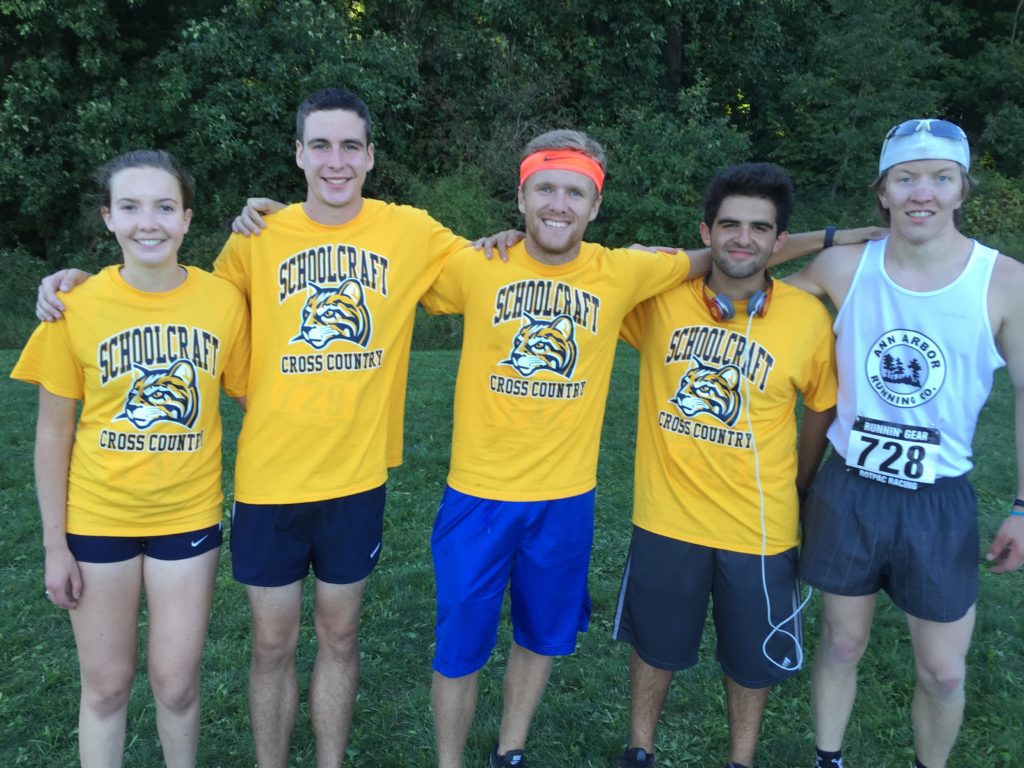
Group of cross country athletes posing for camera
Cross country was one of the first sports offered at Schoolcraft College.

Smith will have to hit the ground running, so to speak, as the season starts the first week of August. Competing in invitationals, rather than dual meets, will be the focus for this season. The Ocelots’ home course likely will be Cass Benton Park, which also is the home course of several area high schools.

“I am super-excited to get going and bring in student-athletes interested in joining the program and build a program that is well-known and respected across Michigan and throughout the United States,” Smith said. 

Prospective student-athletes interested in joining a team should visit the links below:

  • Interested in joining the women’s cross country team
  • Interested in joining the men’s cross country team

Filed Under: News, Schoolcraft Spotlight Tagged With: Canton, Cross Country, Kensington Lakes Activities Association, Livonia, Northville, Plymouth

July 12, 2021 by Schoolcraft College

Renowned classical bass singer adds author to list of accomplishments

Christopher Temporelli is an internationally acclaimed classical singer (bass), concert artist, professor, radio host and now author. This impressive and multifaceted list of accomplishments has its roots in Southeast Michigan, including Schoolcraft College, where he was a student in the fall of 1993 and the winter of 1994. 

“I have such fond memories of Schoolcraft College,” he said. “It was my first collegiate environment to be in and was a wonderful launching place for my future. I would recommend for anyone at the college to really take advantages of the resources the school has to offer, and make the most of opportunities as best one can.”

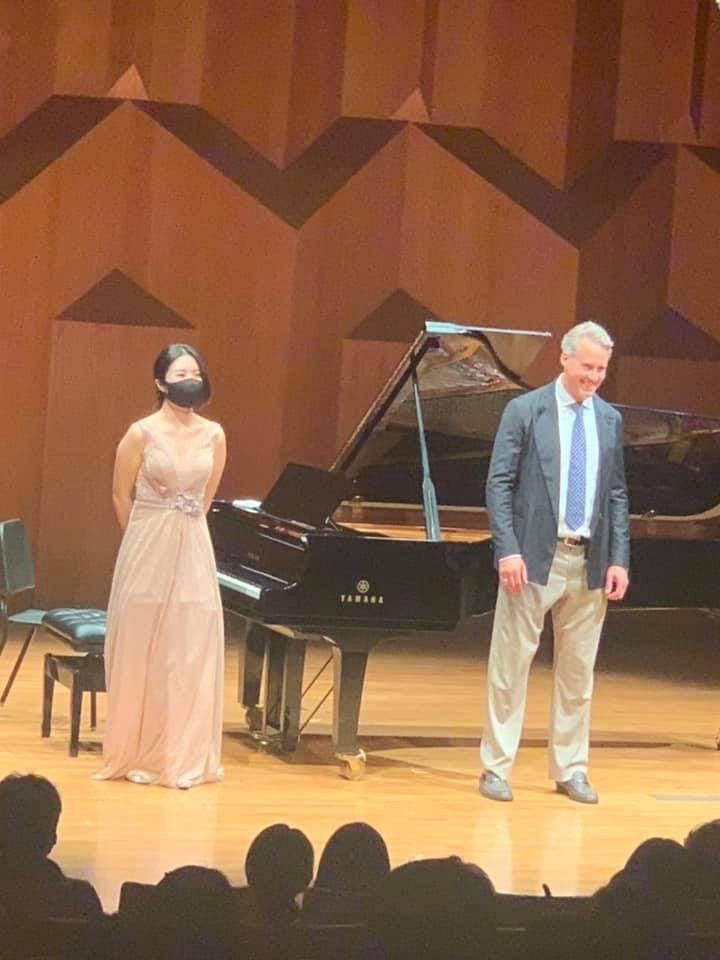
Christopher Temporelli began his college career at Schoolcraft College, then continued at Michigan State University and the University of Michigan. (Photo credit: Won Suk Chang)

Christopher’s mother, Barbara Temporelli, is a Professor of Chemistry at Schoolcraft College. She and his father exposed Christopher to a variety of music at an early age, with performances at the Metropolitan Opera tour in Detroit an early favorite. 

“Chris would sit on the edge of his seat from excitement,” Barbara said.

The desire to go from observer to performer started with piano lessons during pre-school, followed by violin lessons.

“I have such fond memories of Schoolcraft College. It was my first collegiate environment to be in and was a wonderful launching place for my future.”

Christopher Temporelli, classical bass singer who attended Schoolcraft College 1993-94

Music Professor Donald Morelock then became an important instructor and mentor from middle school and on to Schoolcraft College.

“Professor Morelock was my private piano instructor in high school, and it made sense at the time for me to start up my education close to home, at Schoolcraft, and with top-quality professors and instructors,” Christopher said. “I took private lessons in my majors – which I ended up finishing in Piano and Voice performance at Michigan State University – and also took other coursework at Schoolcraft in such courses as music theory, as well as piano pedagogy.

“I also have very fond memories taking part in a choral ensemble.” 

Professor Morelock, who retired in 2011 after more than 40 years of service to Schoolcraft College, appreciated Christopher’s willingness to learn.

“He’s one of those students you don’t forget. He’s very special,” Professor Morelock said. “You could tell early on that he was very talented. He was always prepared for the lessons, interested in what I had to say, interested in making the pieces sound good.

“He was interested in theory and very much wanted a well-rounded education, which he got here at Schoolcraft.”

  • Christopher Temporelli developed a love and passion for music at an early age. (Photo provided.)
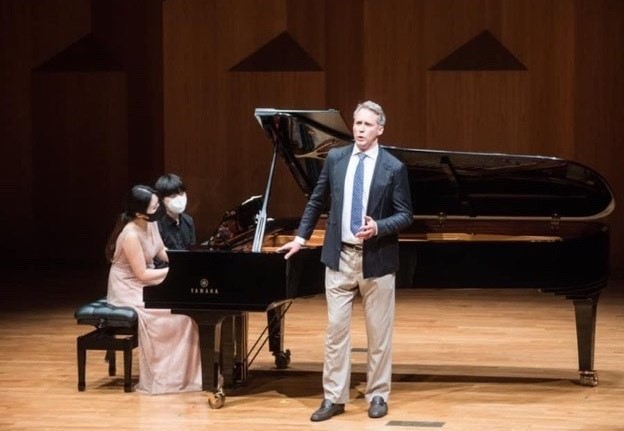
  • Christopher Temporelli performs at the Seoul Art Center earlier this year. (Photo provided.)

Christopher then went on to earn a Doctor of Musical Arts (DMA) Vocal Performance in 2005 from the University of Michigan. 

“One breakthrough moment for me was when I was singing a lead role with the opera at University of Michigan in my graduate school time,” he said. “It was the role of the ‘Forester’ in the opera Cunning Little Vixen. It was a fantastic experience singing a very pivotal role in a performance, and with an excellent team and musicians at U of M. 

“After the performance, for one of the School of Music brochures, my picture was used on the cover, as taken in the role. It gave me a feeling of ‘This career choice just might work out!’”

Performing career takes off

For the next 10 years, Temporelli focused on a performing career based in New York City. 

“It was very exciting to be building this type of career – and traveling around the world sharing music,” he said. “When I had a chance to teach at university, however, it was a new kind of excitement to help others, assist students in gaining these technical and musical skills – and develop themselves into artists. Both experiences have been very satisfying.”

The teaching experiences including serving as visiting professor for classical singing at a number of universities in South Korea. Temporelli also has served as adjudicator on national and international competitions. 

His most recent appearance was at the Seoul Art Center, one of the major venues in Korea and comparable to Lincoln Center in New York Center. Other credits include:

  • Michigan Opera Theater
  • Opera Atelier, Toronto
  • Has sung the U.S. and Italian national anthems for the Columbus Day Parade Gala at the NYC Waldorf-Astoria Hotel
  • Appeared on the red carpet of the Columbus Day Parade on 5th Avenue
  • Concert Hall of the Kennedy Center (Washington, D.C.)
  • National Arts Centre Orchestra (Ottawa, Maestro Pinchas Zukerman)
  • Weill Hall, Carnegie Hall, Manhattan, New York
  • Performed in an Asia a co-production between Beseto Opera and the Prague State Opera at Seoul Arts Center Main Opera House

As with all artists, the COVID-19 pandemic took a toll on his performance schedule.

“I was in India at the very beginning of the pandemic and needed to cancel last minute a concert there that was to have been my debut concert in India,” Temporelli said. ”I have had some virtual performances over the last period, including 2020 summer in a live broadcast from the Concert Hall of the Seoul Arts Center–and that was very exciting.”

Turning a negative into a positive, Temporelli used the time to finish his book geared toward self-development.

Adding “author” to string of accomplishments

Temporelli is continually challenging himself and expanding his career and personal pursuits, so writing a book is a natural outgrowth. His work, FLOW Freedom Laws of the World ™: “Catch the Wave to your Current of Creativity” launched in December of 2020. 

Christopher Temporelli’s new book is available from Amazon. (Photo provided.)

“I wanted to share my ideas about how to pursue anything in a creative, successful and fun manner!” he said. “In summary, I wanted to have the chance to make these personal ideas available, and relevant, even outside of the field of music.”

Temporelli said along with his full schedule, the book took about two years two complete from conception to publication. It is available at amazon.com in a variety of formats. 

Dr. Temporelli is also happy to announce, that starting with a launch around September 2021, his book will be also be available in physical copies in shops across India, at all major airports and bookstores, published under the Times of India logo. 

Filed Under: Alumni Spotlight, News Tagged With: Michigan Opera Theater, Music Department, Opera

July 12, 2021 by Schoolcraft College

Grandmother serves as inspiration for dual-enrollment student

Schoolcraft College student Mackenzie Compton draws inspiration from her late grandmother, affectionately known as “nana,” as she moves forward to make a positive impact in the world.

“My nana was my grandmother on my father’s side and when my parents got a divorce she basically acted like a second mother to me,” Compton said. “I spent every summer with her camping and swimming in the pool. I was extremely close to her. Whenever I had a problem in life, she was the first person I went to. So when all of this happened it truly was hard on me, but it set off something in me to do better for her.”

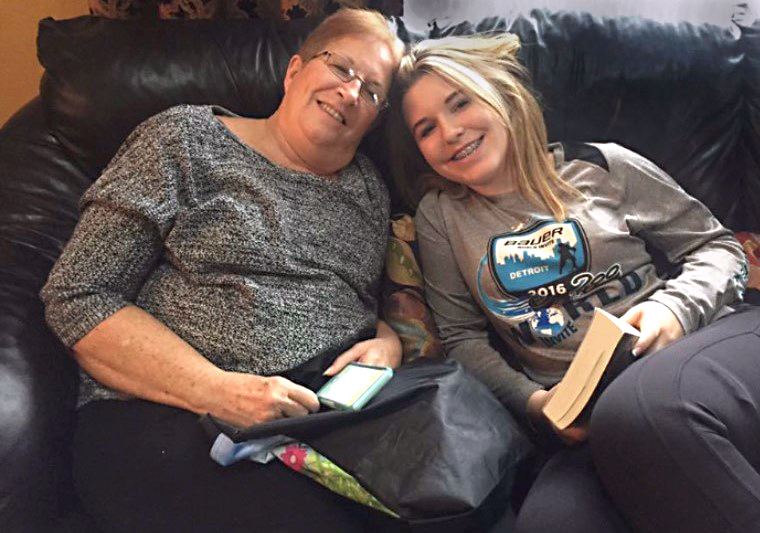
Mackenzie sitting with her Nana
With Nana: Mackenzie Compton said her grandmother was like a second mother to her. (Photo provided.)

A native of Livonia, Compton was already familiar with Schoolcraft College. She became a Dual Enrollment student after starting at Livonia Churchill High School and continuing with Michigan Connections Academy.

“The phlebotomy program grabbed my interest,” Compton said of the program about how to learn to draw blood. “At Schoolcraft I took Anatomy and Physiology (BIO 237/238), Math 113, Math 128, Medical Terminology, Medical Office and Procedures, Biology (BIO 101), Software Applications (CIS 120), and Phlebotomy.”

She also plays travel hockey for Belle Tire out of Taylor, is active in in musical theater at Dearborn Youth Theater and works part-time at Ulta Beauty.

Despite carrying such a heavy academic load, working, and participating in other activities, Compton was determined to succeed – both for herself and to honor her nana’s memory.

“My absolute favorite class was medical terminology with professor Kathy Taylor,” Compton said. “She has stuck with me all these years because she truly cared about her students’ success more than anyone I’ve ever met. She helped me on several occasions and had genuine connections for her students. She was my favorite professor without a doubt.”

Professor Taylor, who teaches in the Health Information Technology program, was similarly impressed.

“Mackenzie was a student in my medical terminology class on-campus for the Winter of 2020 semester,” she said. “I remember the first day of class when I met her. She was an excellent student and participated in class positively.  

“It wasn’t until a few weeks into the semester that she mentioned she was a dual-enrolled student, and I was really taken aback by that fact. Mackenzie was the youngest student in class, but one would have never suspected.

“She was a very mature student – very well-spoken and always on time and always prepared for class. She was just a joy to get to know and was well-respected by her classmates.”

Compton heads to Michigan State University this fall to study nursing and human biology as she begins her pre-med path.

“After that, I am planning to attend medical school (hopefully in California) to study cardiology,” she said.

Professor Taylor sees nothing but success in Compton’s future.

“My impression of Mackenzie is she is an intelligent young lady who has a very promising future and will be quite successful,” she said. “She is a self-motivated, hard worker and focused; I am very confident she will achieve her goals. I believe Mackenzie is an inspiration for our future.”


Feature Photo – Graduation: Mackenzie Compton started at Livonia Churchill High School and continued with Michigan Connections Academy. (Photo provided.)

Filed Under: News, Student Spotlight Tagged With: Dual Enrollment, Health Information Technology, Michigan Connections Academy

July 12, 2021 by Schoolcraft College

Program offers chance to share experience, earn certification

If you’re an experienced motorcyclist, this is the right time to think about sharing your experience and improving your skills by becoming a certified RiderCoach through Schoolcraft College.

“Becoming a certified RiderCoach is a great way to share your passion for motorcycling with prospective and experienced riders, get more involved in the motorcycling community and make some extra money,” said Sean McGlinn, Motorcycle Safety Coordinator for Schoolcraft College’s program, which is part of Personal and Professional Learning (PPL).

PPL is the new name for the College’s continuing education department, previously known as Continuing Education and Professional Development, or CEPD. 

The RiderCoach course is approximately 90 hours long. Course schedules vary, but students should plan on 7 to 11 days of intensive classroom and hands-on (range) activities. Applicants must have their own motorcycle and have been endorsed for at least one year. Cost is $75.

“Becoming a certified RiderCoach is a great way to share your passion for motorcycling with prospective and experienced riders, get more involved in the motorcycling community and make some extra money.”

Sean McGlinn, Motorcycle Safety Coordinator for Schoolcraft College’s program.

Candidates who successfully complete the course will become certified Motorcycle Safety Foundation (MSF) RiderCoaches. Certification lasts for two years, and RiderCoaches apply for recertification by teaching a minimum of four classes, completing various professional-development courses, and submitting those records directly to the MSF.

In addition, the Detroit Metro Motorcycle Safety Consortium, which includes Schoolcraft College and four other community colleges, highly recommends that candidates complete a Basic RiderCourse (BRC) prior to the RiderCoach Preparation Course to familiarize themselves with the curriculum they will be teaching.

Motorcyclists listening to instruction
The RiderCoach course at Schoolcraft College is approximately 90 hours over 7 to 11 days of classroom and hands-on (range) activities. (Schoolcraft College photo.)

McGlinn completed his BRC at Schoolcraft in 2011, has been with the College since January 2018, and recently became a certified rider coach himself.

“I am humbled and honored to work for the program that has benefitted countless prospective and experienced motorcyclists, including myself, in Metro Detroit and beyond.”

The motorcycle training classes have historically been some of the most popular at Schoolcraft College.

“Motorcycle sales were booming last year, presumably because of people exploring new socially distant hobbies,” McGlinn said. “While we are tremendously grateful for, and proud of, training around 900 students last year within the span of just a few short months, we weren’t able to accommodate everyone who inquired about our courses due to the reduced class sizes.

“Typically, we train around 3,000 students every year. There is a backlog of students who weren’t able to take a course last year, and we currently have a significant shortage of active RiderCoaches in the Detroit Metro Consortium.”

RiderCoach applications are currently being reviewed. To request a RiderCoach application, contact [email protected] or call 734-462-4448.


Feature Photo: A large backlog of students means that RiderCoaches are urgently needed in the Detroit Metro area. (Schoolcraft College photo.)

Filed Under: News, Programs Tagged With: Detroit, Detroit Metro Motorcycle Safety Consortium, Motorcycle, Motorcycle Safety, Personal and Professional Learning, RiderCoach

April 12, 2021 by Schoolcraft College

Schoolcraft College alumni are well-known for giving back to their school and to their community. One of many examples is the Culinary Extravaganza (CulEx), a celebration of fine food and wine that traditionally serves as the Schoolcraft College Foundation’s signature fundraising event, with proceeds benefiting students and the program.

A key reason for the success of this event is the support from area establishments, many of which employ Schoolcraft College alumni in key positions. They donate delicious food and beverages and generously lend their time and talent to ensure a successful experience.

Sadly, the CulEx had to be canceled in 2020 because of COVID-19, which has devastated the restaurant industry. To help restaurants in this time of need, the Schoolcraft College Foundation offered a helping hand in the form of $1,000 grants to 20 area restaurants that are owned by Schoolcraft alumni and/or employ Schoolcraft students.

Most restaurants are in Detroit, but businesses in Birmingham, Hazel Park, Northville, Novi, Plymouth, Redford and Royal Oak benefited as well.

“Past support we received from area restaurants in terms of their delicious food and beverages, their amazing talent and their generous time really makes the Culinary Extravaganza happen,” said Dawn Magretta, Executive Director, Schoolcraft College Foundation & Alumni Relations. “These restaurants have done so much to help us over the years, so we wanted to return the favor and help them during these challenging times.”

News of the difficult times in the restaurant industry prompted Joan A. Gebhardt, Chair of the Schoolcraft College Board of Trustees, to act.

“The food industry has been devastated by the COVID pandemic probably more than any other,” she said. “Reading and hearing on TV about chefs losing their jobs and restaurants closing made me want to help them.   

“At Schoolcraft we prepare our students to be ‘job ready,’ but nothing prepares our culinary grads, our extended family, for dealing with this pandemic.”

Certified Executive Chef Chris Misiak was immediately enthusiastic about the concept and helped bring it to reality.

“Schoolcraft College is committed to supporting the community it serves, and the Culinary Arts Department reflects that mission,” he said. “In Culinary Arts we see our alumni and students as a type of family and we will always support family.”

The cash infusion has been greatly appreciated.

“I am touched and appreciative that the same institution that trained me as a chef is supporting me again in such a challenging time,” said Chef Paul Grosz, owner of Cuisine Restaurant in Detroit and a Schoolcraft College alumni. “The COVID-19 pandemic has impacted the food industry tremendously, and I am so thankful that our community is coming together to support each other.”

Kelli Lewton, chef/owner of 2 Unique Caterers and Event Planners in Royal Oak, has been associated with Schoolcraft College for more than 30 years, first as a student, then a member of the culinary team and an instructor in the Culinary Arts department for more than 20 years.

“I was honestly brought to tears when I opened the letter and found the check,” Lewton said. “Sometimes the help you need on a dark day is to know that someone is thinking about you and cares.”

Lewton said she put the $1,000 toward payroll for her business, which is entering its 30th year in operation.

“It sounds simple, but kindness is really what we all need during these dark days” Lewton said. “Kindness has a spark that can fuel fires of hope, change and better in our lives and businesses.”

Filed Under: Community, News Tagged With: Chris Misiak, Culinary Arts, Culinary Extravaganza, Dawn Magretta, Joan A. Gebhardt, Schoolcraft College Foundation

April 5, 2021 by Schoolcraft College

Dorian Hall and James Ellison are on a mission to change the perception of craft beer, and more important, craft beer brewers in Metro Detroit.

Each is a recent graduate of Schoolcraft College’s well-respected Brewing and Distillation Technology (BDT) program. Already close (they are brothers-in-law – James is married to Dorian’s sister), they have a passion to make their mark through their own label, The Black Hop Brewing Company, and to raise awareness for a new path for budding entrepreneurs.

“There aren’t a lot of minorities in Detroit doing this,” Dorian said. “James and I are trying to bridge that gap, diversifying what craft brewery owners look like in Metro Detroit.”

Finding Schoolcraft College

Dorian found out about Schoolcraft College’s program by accident while he and his wife were enjoying a happy hour in Royal Oak. Dorian’s wife wanted to try a beer with a fruity taste and asked the server for a recommendation. The recommendation was a hit; after more conversation, the server revealed he was a student at Schoolcraft College “majoring in beer.”

“I thought, no way there’s a school that teaches that,” Dorian said. Intrigued, he called James about his discovery. After learning more about Schoolcraft College’s program, they enrolled in the spring of 2018. Both earned the Cicerone®* Certification Program’s Beer Server Certificate and TIPS® (“Training for Intervention Procedures”) alcohol server certification and were top of their class.

Passionate Instructors Focused on Your Success

James and Dorian appreciated the personal attention they received in the BDT program at Schoolcraft College.

“You can tell the instructors are incredibly passionate about what they do,” James said. “They are proactive about reaching out to make sure you’re succeeding.” 

Dorian said most people don’t realize craft brewing combines elements of art and science – especially chemistry.

Schoolcraft College’s six faculty members have more than 100 years’ experience combined in positions across the spectrum of the craft brewing industry.

“Every instructor is in the industry,” James said. “They’re not just telling you something out of a book – they’re living it. They challenge you, but they also will be with you every step of the way.”

Before beginning their formal education, Dorian and James had experimented with a home beer kit. Although dissatisfied with the results, they were on the right track, but just needed a bit more of the expertise Schoolcraft College provides.

“We’re still home brewers,” James said. “Once you’re a home brewer, you don’t stop – you just buy bigger equipment!”

Focused on a Bright Future

Dorian and James wanted to learn even more about distillation of spirits, so they contacted businesses around Michigan for opportunities. They said Schoolcraft College’s excellent reputation helped open doors as they learned how to make award-winning vodka.

“Schoolcraft College has won 27 awards for their beer,” Dorian said. “That means they’re doing something right.”

And now Dorian and James are eager to put the knowledge they gained at Schoolcraft College to work with their own establishment and perhaps serve as inspiration for others to follow that path.

“People don’t know a program like Schoolcraft is out there, and yet it’s right here in their local county,” Dorian said. “Schoolcraft College broadened my horizons and will open your eyes to realize craft beer doesn’t have a ‘look.’” 

James is ready for what promises to be an exciting next chapter.

“Our biggest mission is to open a new avenue for everybody whowants to step up and do something different,” he said. “Follow your passion. Schoolcraft allowed us to do that.” 

*A Cicerone is an expert in pairing beer and food, among other abilities.

Filed Under: News, Student Spotlight Tagged With: BDT, Beer, Brewing, Brewing and Distillation Technology

March 29, 2021 by Schoolcraft College

Today for “Faculty Spotlight” we’re sitting down with Dr. Jerome Lavis, who serves Schoolcraft College as a Professor of Chemistry and also as the Faculty Forum President. 

Schoolcraft College: Hello, Dr. Lavis! To start out, we are in unprecedented times in terms of how people are teaching and learning at all levels of education. What has stood out to you over this past year or so, both as an individual professor and leader of our faculty?

Dr. Jerome Lavis: What I was most impressed with over the past year was the adaptability of the faculty and the College as a whole as well as the collaborations that occurred between faculty as well as between the faculty and the administration. During the end of the Winter 2020 semester, faculty were able to quickly turn around to finish the semester, and as the reality of the long-term future settled in, prepare for the next Spring and Fall. With the support of the administration, Media Services and especially Distance Learning bringing their expertise forward, faculty were quickly able to get trained and switch their method of teaching.

SC: The Schoolcraft College faculty has been outstanding in terms of adaptability and sharing best practices. In many ways, our professors and instructors have had to “go back to school” in terms of their teaching methods. Could you please highlight a couple of success stories and learnings?

Dr. Jerome Lavis: I probably should start with Chemistry, and the adaptation of the laboratory to the new environment. This was a true challenge as the department felt that some of the courses needed to use the school facilities for teaching laboratories, due to the inherent dangers of some of the chemicals used. 

This required a complete change in the operation of the labs. Occupancy had to be dropped, and in order to maintain a workable enrollment all activities that did not involve the use of chemicals had to be pushed to a remote format, with the extensive recording of videos. Also, to avoid students getting in contact with each other, we moved to students having their own chemicals. This required tremendous work from Melissa Gury’s team, who was in charge of the logistics, and none of this would have been possible without them. This was a true cooperative effort from all faculty, staff and administration. And some of the new formats are expected to be maintained even after the lifting of social distancing restrictions as they were actual improvements.

I do not have first-hand knowledge of the other departments, but I have heard many stories of cooperation within faculty working together to adapt their curriculum and class formats. 

But to me the greatest success is that students were able to continue receiving a quality education. Even though the College, in many cases, had to offer classes with much lower enrollment than normal, it continued to offer all of our services to students.

SC: What are the challenges for teaching chemistry in a virtual environment? What steps are you doing to help students feel more comfortable in the lecture portion and how are you handling the lab portion?

Dr. Jerome Lavis: The labs were handled differently depending on the courses. For the courses that already had or were in the process of having an online course design, the labs were moved to the student’s home through commercial kits. For the others we kept the labs on campus. 

Depending on the course, we either shortened the lab by placing the pre and post labs entirely online, or we extended the class over two classrooms, depending on the occupancy of the lab rooms.

For the lecture, the main challenge to me was not being able to see the students. Because students are most likely in their homes, both the faculty and the college felt it would not be appropriate to require them to reveal their private surrounding. But this creates a rather impersonal setting. 

It was not so bad in March last year because we had already spent half the semester together in the classroom, but for last Fall and this Winter it creates a more disconnected setting. I also struggled with whether to record lectures or not. I opted to record them for the benefit of those students who need a job, especially in this environment, or who do not have a quiet home environment during lecture times.  

The downside is that attendance is clearly lower and fluctuates greatly from one session to another. The last issue is one common to all online setting, which is academic dishonesty during examinations; it makes us create different exams when one accepts the fact that students have access to their materials, but even then it is not optimal. For my part I decided to hold my exams on campus, in a similar fashion as what the math department did.

SC: You were elected Faculty Forum President last summer. Please explain what that role entails and your goals.

Dr. Jerome Lavis: My role is to serve as the chief representative of the faculty. I work to ensure that our concerns, opinions and expertise are taken into account when decisions at the College are being undertaken. Our work is directly linked to our student’s learning experiences here at Schoolcraft. Improving the working conditions of our faculty is tied to improving the learning environment of our students. 

Overall, this means that I work hard to ensure that the College administration and faculty work collaboratively to generate innovative and mindful solutions to the challenges the Colleges faces. In the end we all rise and fall together, and therefore my main goal is to encourage a tradition of co-governance. Maintaining the integrity of our contract is integral to this approach. After all, I believe that it is impossible to achieve our stated mission without meaningfully calling on faculty to contribute to the strategical decisions required to make the College more forward.  

SC: You’ve served Schoolcraft College since 2010. Please tell us a little about your background and your career.

Dr. Jerome Lavis: At the beginning … I was born and raised in France in the western suburbs of Paris. When I was in high school deciding on what to do, I hesitated mostly between three possible careers: Becoming a Judge (they are not elected in France), going into the military (air force or navy) or going into the sciences. Both my parents were engineers by formation, and my mother was a high school science Physics and Chemistry teacher. 

You could say that the apple did not fall far from the tree. I decided to study sciences, and eventually went into an engineering school for Chemistry rather than the military. The love of chemistry was given to me by my Chemistry college professor, during my freshman year. She was very engaging and knowledgeable, and even though I struggled with the material at times, I knew that it was what I wanted to do. 

I eventually went to the ESPCI in Paris, which is the school where Pierre and Marie Curie used to teach a century ago, and then got a Master’s Degree in Organic and Bioorganic Chemistry from the University of Paris VI, and then a Ph.D. in Organic Chemistry at Michigan State University. It is at MSU that I decided I wanted to teach. Initially my goal was to go work for a pharmaceutical company and do research in drug design, but working as a teaching assistant, I fell in love with teaching. I started my career at the Universite de Montpellier II in France before moving back to Michigan and teaching five years at Grand Valley State University. Finally, I joined the Schoolcraft Faculty in 2010. 

SC: Thank you, Dr. Lavis. Is there anything else you would like to add?

Dr. Jerome Lavis: Just that I stand in awe when looking at the adaptability of our students, our faculty and the College as a whole.

Filed Under: News, Schoolcraft Spotlight Tagged With: Chemistry, Faculty Forum President, Jerome Lavis

March 29, 2021 by Schoolcraft College

Restrictions and safety protocols prompted by the COVID-19 pandemic have challenged Culinary Arts students and faculty for more than a year. Creativity and adaptability have been key ingredients for those studying and teaching this discipline to succeed during these difficult times.

Those attributes recently shined through again as a team of 11 students taught by Certified Executive Chef Brian Polcyn won a contest sponsored by The Butcher’s Guild, a fraternity of meat professionals focused on selling good meat.

Each month, this organization sponsors the Attabutcher Contest. Most competitions are geared toward butchers’ cuts for retail display. The February contest, however, centered on the French classic Chicken Galantine, a dish Schoolcraft College students prepare as part of the curriculum every rotation. The presentation included smoked tongue and pistachios.

Chicken Galantine is a French cold chicken preparation that uses the charcuterie (pronounced shar-coo-tree) technique. Charcuterie is the craft of how food, such as salami, ham, smoked sausage and more, were prepared and preserved before refrigeration. One of the core classes in Culinary Arts is Charcuterie (CUL 215), where students learn salting, curing, sausage production, smoke house, pate, terrine, galantine and more.

“As an Instructor it’s wonderful to go through the educational process, but the best is to see the excitement in the students when something actually works!” Chef Polcyn exclaimed.


Learn about the Culinary Arts Program

Filed Under: News, Programs Tagged With: Brian Polcyn, Charcuterie, Culinary Arts

  • « Go to Previous Page
  • Page 1
  • Interim pages omitted …
  • Page 20
  • Page 21
  • Page 22

Primary Sidebar

    Schoolcraft College

    18600 Haggerty Road, Livonia MI 48152     
    734-462-4400     
    Answer Center

    • Search A-Z
    • Inquire
    • Visit
    • Apply
    • Register
    • Semester Guide
    • Search for Classes
    • Academic Catalog
    • Academic Dates
    • Directories
    • Ocelot Access
    • Blackboard
    • SCmail
    • SC Aware Report
    • SC Police Department
    • Careers at Schoolcraft
    • Schoolcraft Foundation
    • Accessibility
    • College Policies

    All Social Media

    Copyright © Schoolcraft College |
    Notice of Public Meetings of the Board of Trustees

    Respiratory Virus Information | SC Annual Security Report 2025 |
    Campus Safety Transparency Reporting

    Campus Hazing Transparency & Resources

    Budget and Transparency Reporting

    Copyright © 2026 · SC Main on Genesis Framework · WordPress · Log in